Winter chicken care: prepare the coop before the first freeze
The first icy waterer often arrives before anyone feels ready for winter. A useful check starts in the coop on an ordinary chilly morning, while there is still time to fix the leak, move the waterer and test the power safely.
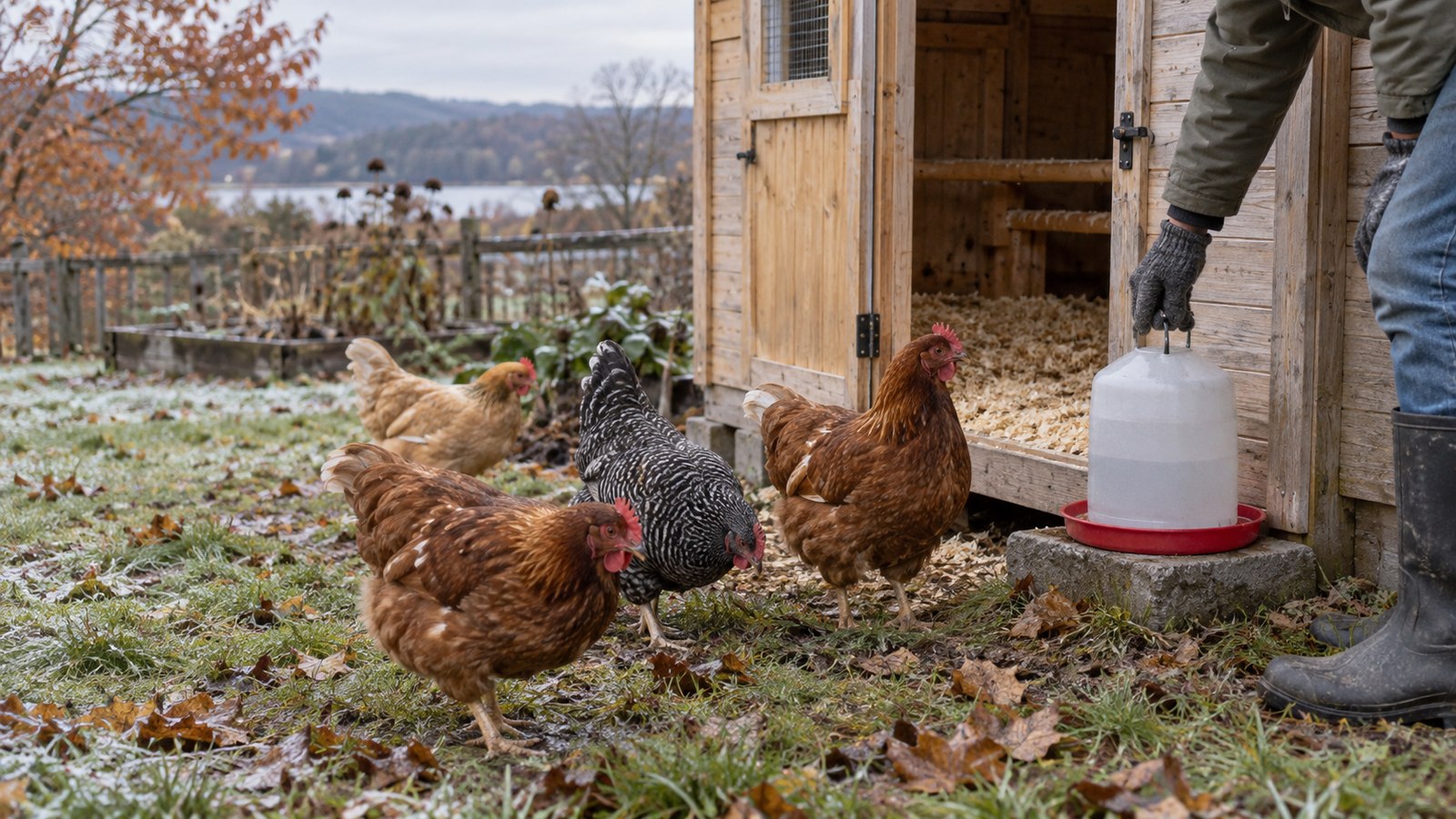
The short version: keep the coop dry and the water liquid
Cold weather advice can become a contest about temperatures. In a backyard coop, the questions that matter first are more visible: is the litter dry, can stale humid air escape, and can every bird drink? A healthy, fully feathered adult has a different tolerance from a chick, an unwell hen or a bird halfway through a hard molt. Treat those birds as individuals rather than applying one number to the whole flock.
Visit the coop early, before the door has been open long enough to clear the air. Look for condensation under the roof, damp bedding below the roost and an ammonia smell. Then watch where the hens settle after dark. An opening that seems harmless at your shoulder may blow across the birds where they sleep. That observation is a better starting point than buying a heater because the forecast looks alarming.
Walk the route rain and wind take through the coop
Start outside. Check the roof edge, door threshold, window joints and the ground immediately around the building. Water running toward the entrance will keep bedding wet even if the roof is sound. Clear drainage and repair leaks while the materials can still dry. Inside, move the litter aside at the corners and beneath the roost. Dark, damp wood tells you where a small problem has been working quietly for weeks.
Close the door and feel for drafts at roost height. Seal gaps that aim wind directly at the birds, but preserve deliberate ventilation above them. Check roosts, latches, predator-proof mesh and any electrical cable before freezing rain makes repairs awkward. A heater or water-base warmer should be tested under supervision and installed according to its instructions. Never trail a household extension lead through wet bedding.
Ventilation still matters when the door stays shut
Hens add moisture through breathing and droppings. When warm, damp air reaches a cold wall or roof, it condenses and can drip back into the bedding. Ammonia is another warning that cleaning and air exchange need attention. A winter coop needs a route for used air to leave without a cold stream crossing the roost. The exact vent arrangement depends on the building, flock size and prevailing wind.
Do not copy an online vent measurement without looking at your own coop. Check it after an overnight closure. Are the windows wet? Does the litter clump? Do the hens avoid one end of a perch? Remove droppings beneath roosts more often and address a leaking waterer before enlarging holes. If humidity persists, improve the air path above the birds. University extension guidance on small poultry housing gives a useful explanation of the difference between ventilation and drafts.
Build a water routine for the coldest morning
A full waterer can still be unusable if its base is frozen. Check the drinking point rather than glancing only at the reservoir. If you have no electricity at the coop, rotate two containers: take one indoors to thaw while the flock drinks from the other. Warm, not hot, water buys time but does not last through a long freeze. Fresh snow should never be the plan for meeting a flock's water needs.
A purpose-made heated base may save repeated trips. Keep wires protected from pecking, water and bedding, and have any permanent supply installed safely. Put the waterer where spills will not soak the roost area. During the first cold spell, check it morning and afternoon until you know how the particular unit behaves. Note the conditions when the water froze; next winter that record will be more useful than a product claim.
Feed the birds, not the winter myth
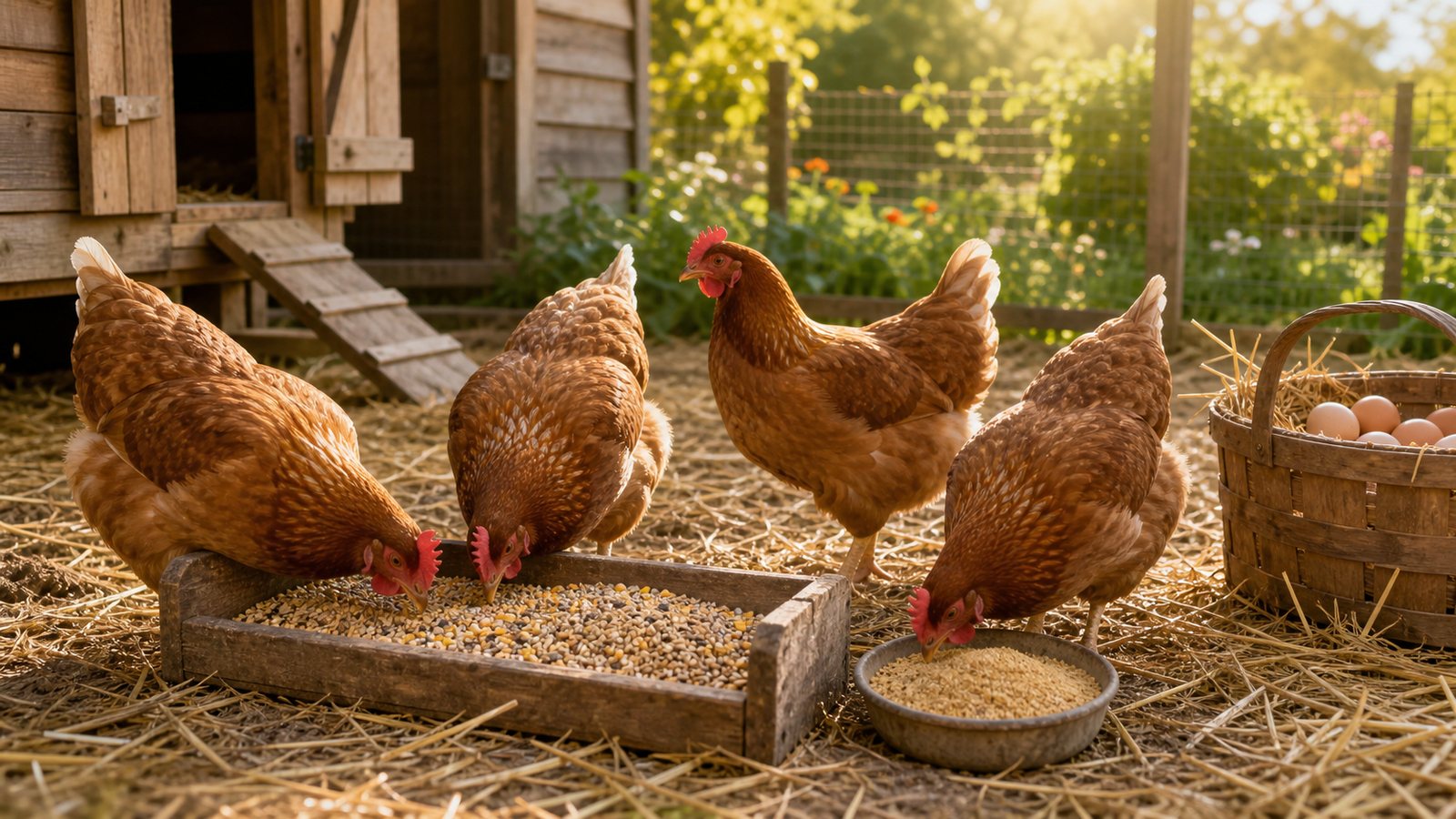
Birds in cold conditions may use more energy, but a handful of corn is not a universal prescription. Start with a fresh complete ration for the birds' life stage and make sure subordinate hens can reach it. Watch actual intake. A full feeder does not prove that the smallest hen has eaten if dominant flockmates guard it. Add a second feeding point if the group is uneven or confined more than usual.
Keep feed bags dry and discard anything moldy. Treats can be useful for occupation but should not displace balanced feed, particularly when the birds are laying or regrowing feathers. Feel body condition gently around the breastbone and record any consistent weight loss. Our layer-feed guide explains how to judge the basic ration before reaching for supplements.
Give outdoor access a weather plan
Many healthy adult hens will venture out on cold days if a dry, sheltered route is available. Some dislike snow altogether. Neither reaction requires forcing. A roofed patch close to the pop door and a windbreak can provide a usable scratching area when the rest of the run is icy or muddy. Check for slippery hard ice and make sure birds can always return to shelter.
Climate matters. A wet coastal winter, a dry inland freeze and a prolonged northern cold spell create different problems. Look at wind, wet feathers and available shelter rather than simply the date on the calendar. Birds with exposed skin, damaged plumage or feathered feet deserve closer checks after wet snow. If local animal-health rules restrict outdoor access, follow the current local instructions for your flock.
Fewer eggs can be a normal seasonal change
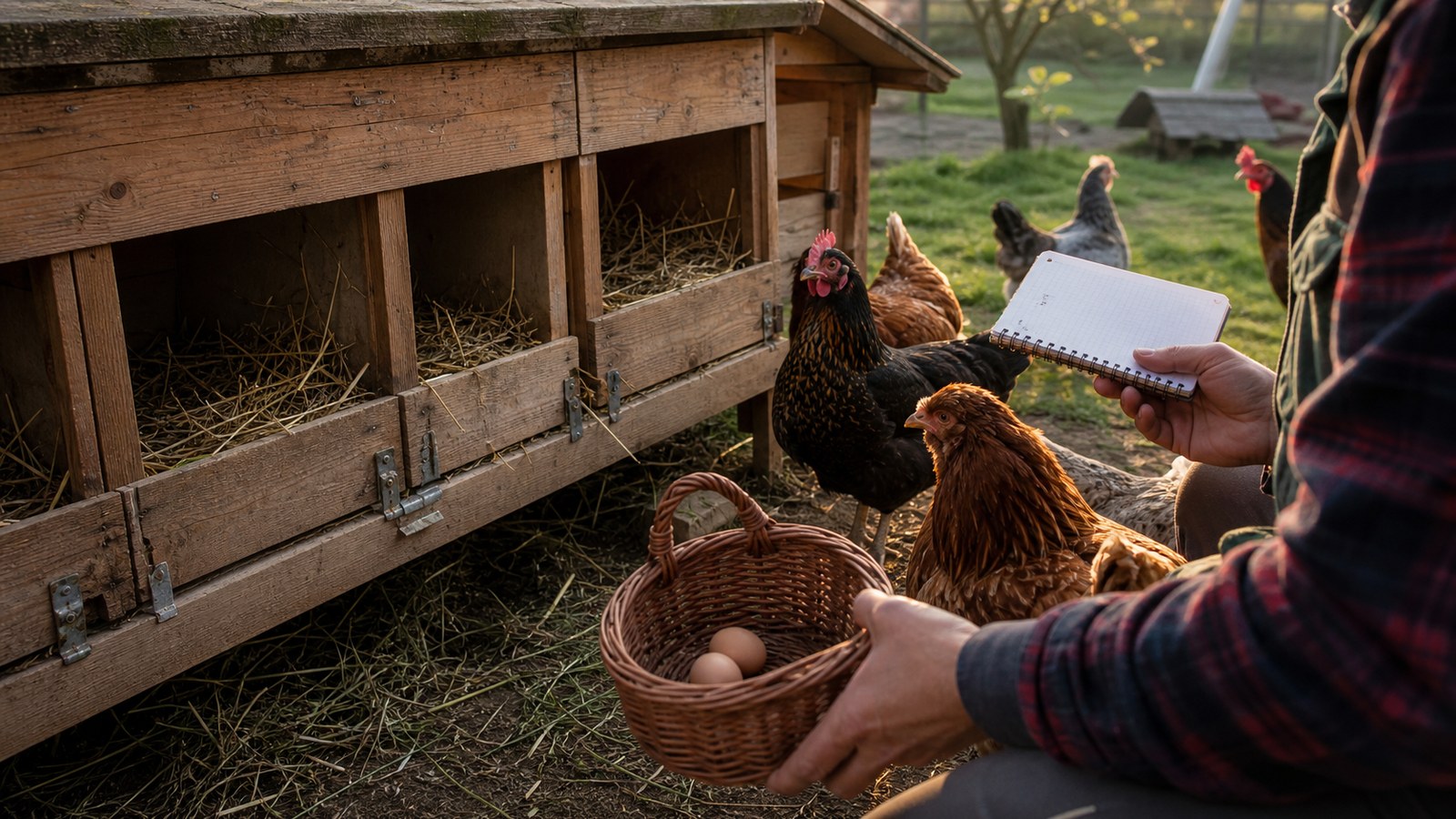
Shorter days and the annual molt often reduce laying before the hardest weather arrives. Older hens may respond differently from pullets. Track eggs per day, flock size and any recent feed or lighting change for a week before diagnosing a nutritional problem. Check hidden nests and ensure water is available. If one hen is unwell, treat that as a health issue even if the rest of the flock is simply slowing down for the season.
Supplemental light can influence laying, but a backyard flock does not have to produce at a summer rate all year. If you choose a lighting schedule, make it consistent and preserve a proper dark period. A lamp switched on at random late at night is not a thoughtful solution. Read why hens stop laying eggs for a fuller check of causes beyond winter.
Heat requires a decision about the birds and the building
Do not assume every adult hen needs the same treatment. Chicks, birds that are sick or underweight, and hens missing large areas of feathers need closer protection. Watch for persistent huddling, reluctance to move, repeated foot lifting or a bird being pushed away from feed and shelter. A thermometer helps describe the conditions, but behaviour and body condition tell you whether an individual is coping.
If supplemental heat is necessary, use equipment intended for animal housing and consider fire, moisture and power-failure risks. Heat never replaces dry bedding and clean air. Advice differs by climate and coop design, so use local veterinary or extension guidance for severe cold. Our article on coop insulation discusses where building improvements help. A distressed bird needs veterinary assessment, not a trial of random add-ons.
Seven days of notes make the next cold spell easier
On day one, fix any leak and draft aimed at the roost. On the following morning, check condensation, smell and litter before opening everything. Record water checks at the same times each day, then eggs and feed use. Watch two or three identifiable hens rather than catching the entire flock repeatedly. After dark, confirm that every bird has a comfortable perch and that the weakest is not stranded below it.
At the end of the week, compare those notes with weather, not just the coldest night you remember. If the litter remains wet, revisit spills, drainage, manure and airflow. If the water still freezes, troubleshoot the equipment and its location. If one hen is hunched, refuses food or struggles to breathe, seek help promptly. The lethargic-hen guide can help you collect useful observations before calling a poultry veterinarian.

Piotr Markot
poultry keeper. I keep poultry myself and write about the checks that actually help around a small coop, without pretending that every odd egg or missing feather has one magic answer.
Read next on the blog
See all guides →
FAQ
Can backyard chickens go outside in winter?
Healthy adult birds can use a sheltered run when they have a dry route back to the coop. Watch wind, ice and wet plumage, and let reluctant birds stay in.
Should I heat the chicken coop?
It depends on the birds, weather and housing. Begin with dry bedding, water and draft-free ventilation; chicks and unwell birds need individual assessment.
How do I stop chicken water freezing?
Check the drinking point several times daily, swap thawed containers or use a properly installed waterer heater. Snow is not a reliable substitute.
Why are my hens laying fewer eggs?
Short days, molt and age often overlap. Also check water, complete feed, hidden nests and health before changing the lighting schedule.
Sources behind this guide
University extension and agricultural guidance on water, ventilation and cold-weather poultry care.
A question about your flock?
Share the birds' age, weather, water arrangement and what changed. The email address appears only after you click.
Keep the winter notes together
Use Twoja Farma to record eggs, flock observations, feed changes and conditions. A week of notes can reveal whether the coop repair helped.