Why do chickens pant with open beaks? Heat stress signs and first aid
 Piotr Markotpoultry keeperFor backyard keepers and small flocks
An open beak on a hot afternoon is often the first visible sign that a chicken is struggling to lose heat. Here is what to do immediately, how to cool the coop and when panting points to something other than weather.
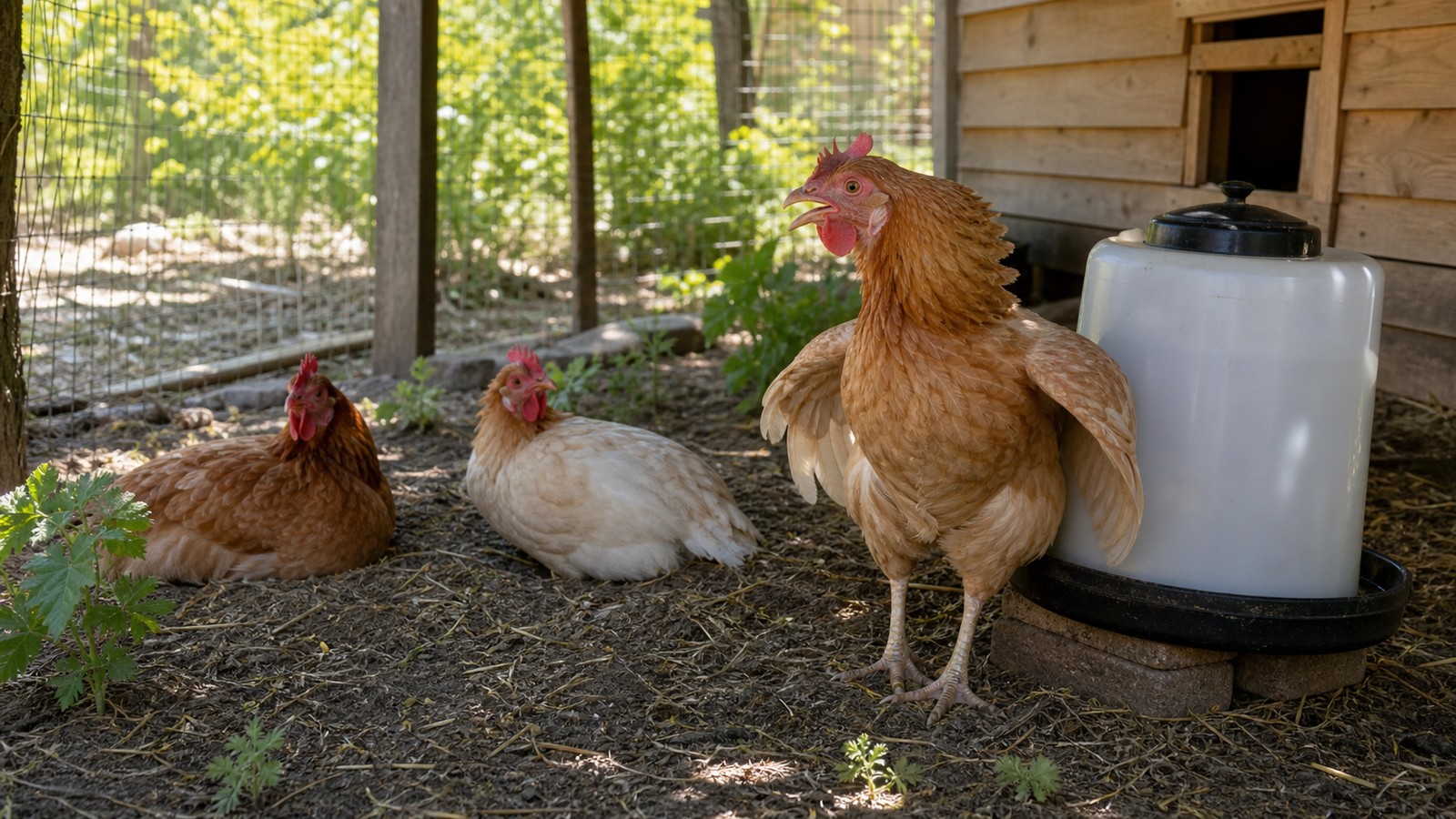
The short answer: a chicken opens its beak to release excess heat
Chickens do not sweat like people. When they become too hot, they start breathing rapidly with an open beak. Evaporation from the respiratory tract helps lower body temperature. They may also hold their wings away from the body, seek shade, move less, drink more and eat less. When several birds behave this way on a hot afternoon, heat stress is the most likely cause.
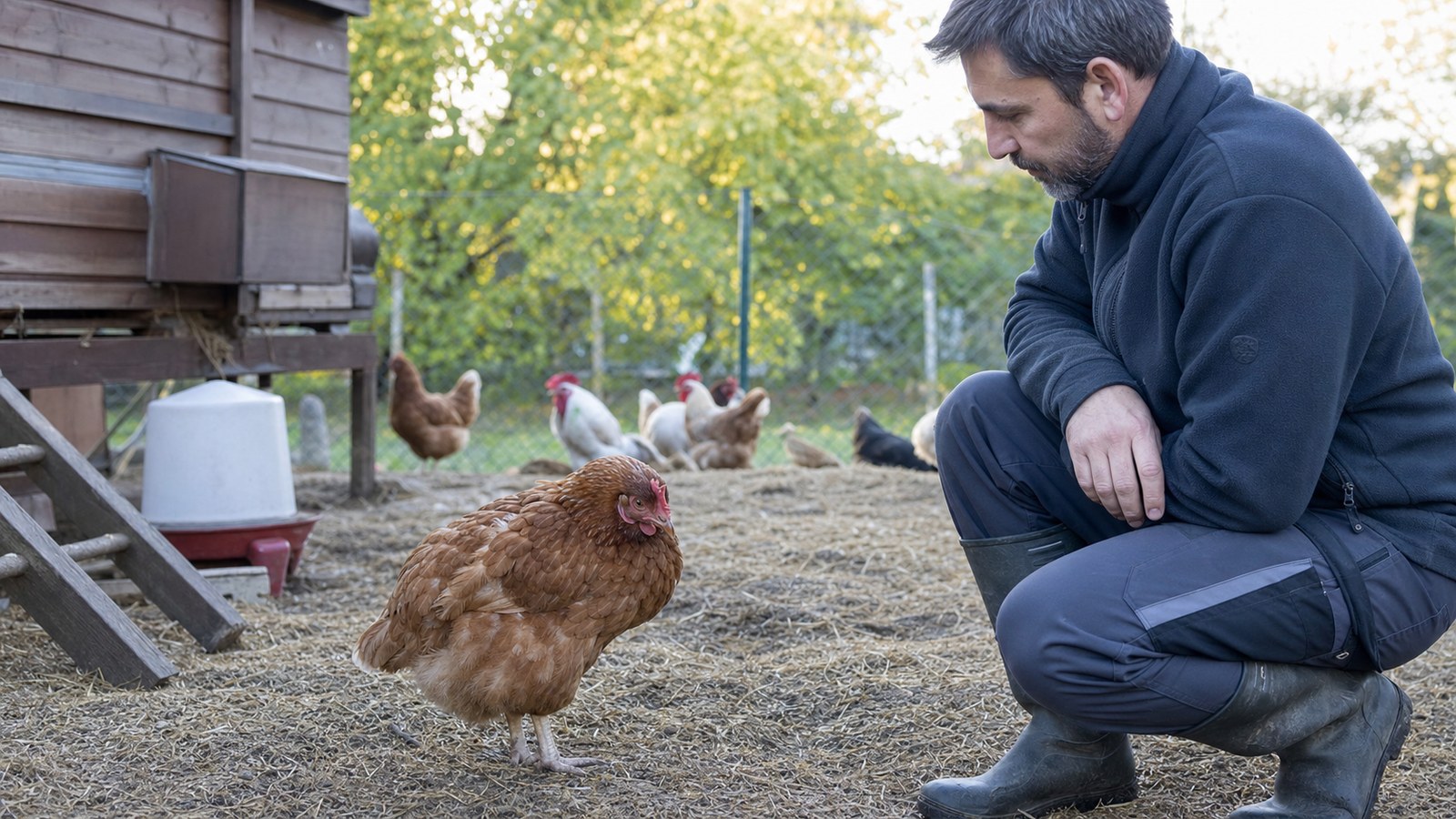
Panting does not always mean hot weather. A chicken may briefly breathe with an open beak after being chased, handled or badly frightened. If only one bird pants in cool, calm conditions, inspect it more closely. Wheezing, sneezing, nasal discharge, facial swelling, a blue comb or obvious difficulty drawing breath are not normal cooling behaviour.
The speed of your response matters. Mild panting is an early warning, not a reason to panic. Laboured breathing, stumbling, lying down, poor response or loss of consciousness indicate an emergency. The bird needs a cooler, well-ventilated place immediately and urgent veterinary advice.
Why chickens pant and hold their wings away from the body
Feathers are excellent insulation in cold weather, but they also make it harder to lose heat in summer. A chicken increases airflow through the respiratory system by opening its beak and breathing faster. Holding the wings out exposes less-feathered areas. These are normal thermoregulation mechanisms while the bird remains alert, stands steadily and responds to its surroundings.
Air temperature is only part of the picture. High humidity makes evaporation from the respiratory tract less effective, while still air reduces heat loss. A shaded but airless coop can therefore be more dangerous than a slightly warmer run with good airflow. Direct sun, a hot roof, crowding and poor access to drinkers add to the risk.
Three levels of heat stress you may see in the flock
The boundaries are not exact. A bird can deteriorate quickly, especially in high humidity or if it was already dehydrated. Do not wait until every hen is lying down. Open-beak breathing in several birds is enough reason to check water, shade and ventilation at once.
| Level | Typical signs | What to do |
|---|---|---|
| Early warning | open beak, faster breathing, wings held slightly out, seeking shade | improve shade, water and airflow immediately |
| Serious overheating | very rapid panting, weakness, little activity, pale comb, reduced appetite | move calmly to a cooler place and monitor continuously |
| Emergency | stumbling, lying down, seizures, poor response or unconsciousness | cool gradually and contact a veterinarian urgently |
What to do in the first 15 minutes
Remove the cause rather than treating only the sign. Topping up one drinker is not enough if it stands in full sun or dominant hens block weaker birds. Two or three shaded drinking points are safer than one large container for the whole flock.
Do not suddenly immerse a hot chicken in ice water. Abrupt cooling and extra handling can intensify stress. In a serious case, move the bird calmly, wet the unfeathered legs and comb with cool water, provide airflow and obtain veterinary instructions. Do not pour water into the beak of a weak bird because it may aspirate it.
- provide deep shade that can hold the whole flock, not just a few hens
- open safe ventilation points and create airflow without blowing dust
- replace the water with fresh, cool but not ice-cold water and add another drinker
- check that drinkers actually work and that lower-ranking birds can reach them
- move feeding, cleaning and handling to a cooler part of the day
- place a severely affected bird in a calm, ventilated area and call a veterinarian
Water in hot weather: how much to prepare and how to protect the supply
During heat stress, chickens may drink much more than usual. University of Minnesota Extension notes that water intake can rise to two to four times the normal amount in hot conditions. Do not plan the supply from a mild day's use alone. Constant access, clean drinkers and several checks during the day matter most.
Keep drinkers in shade and clean them more often because warm water becomes dirty quickly. Check leaks, levelling and nipple flow. To estimate a reserve for your flock, use the chicken water calculator, select the hot-weather setting and add a margin for spills and equipment failure.
Electrolytes can be useful in specific situations, but they do not replace water, shade and ventilation. Use only a poultry product according to the label or veterinary advice. Do not mix improvised quantities of salt, baking soda and supplements into the flock's only drinker.
How to cool the coop and run without creating a damp trap
Shade must move with the sun or cover an area that stays protected through the hottest part of the day. Shrubs, an open-sided shelter and a light-coloured tarp fixed high above the run work better than a low dark cover that traps hot air. Shade a metal roof from the outside where possible; closing the windows does not cool a coop.
A fan can help if it is securely mounted, protected from dust and water, and not blasting litter directly at the birds. Inlets and outlets should create real air exchange. Use cooler night-time hours to flush accumulated heat from the building.
Fine mist can be useful in a dry climate but becomes less effective as humidity rises. Do not soak the litter or turn the shaded corner into mud. Warm wet litter encourages ammonia, flies and foot problems. If you use water, target the roof, the air above the run or a small patch of ground that can dry quickly.
Why hens eat less and may lay fewer eggs during a heatwave
Digesting feed also generates heat, so chickens reduce their intake during hot weather. Lower consumption of energy, protein and minerals can reduce egg production and weaken shell quality. The drop does not always appear on the same day; it may become visible after several hot days.
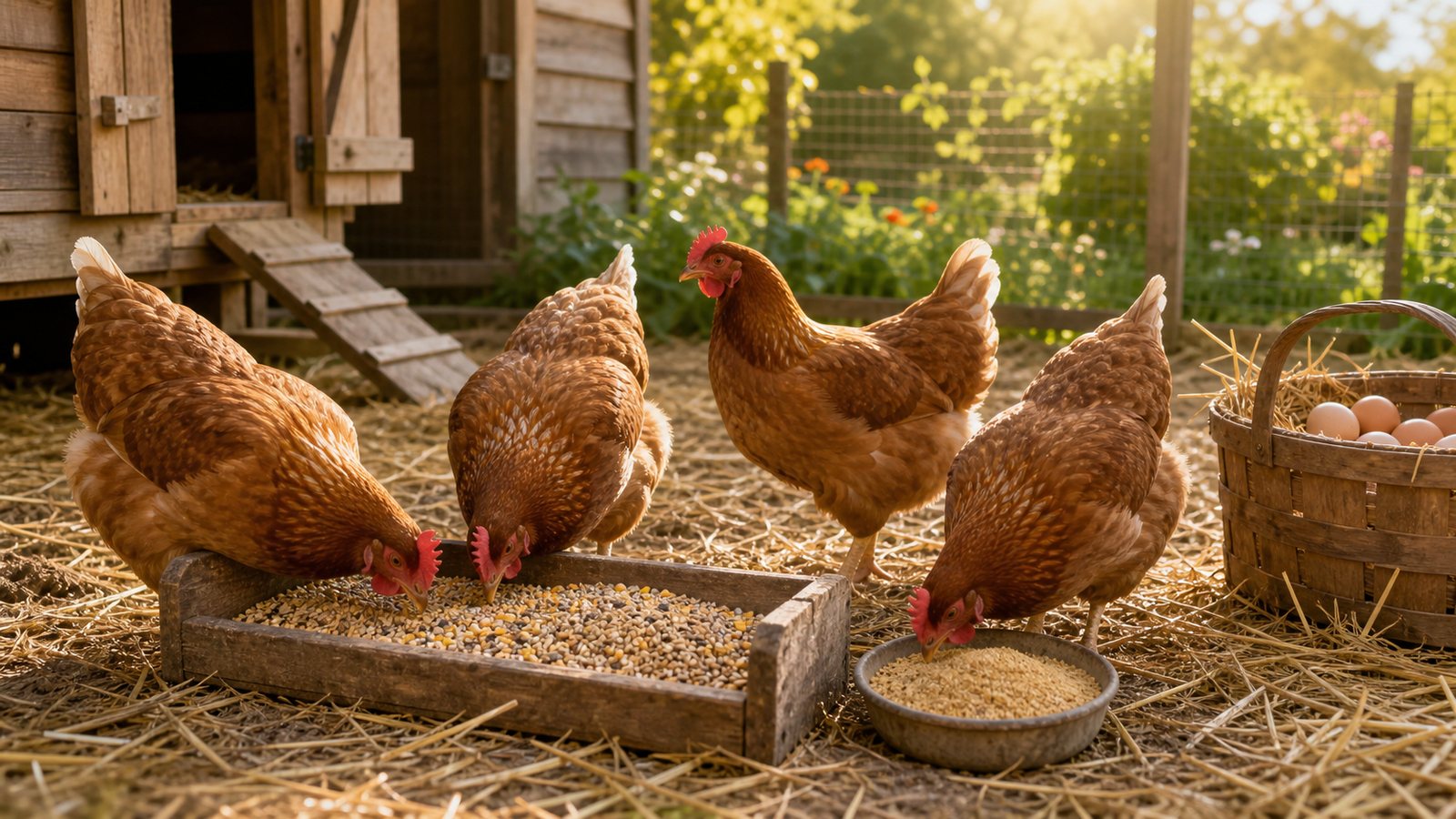
Complete layer feed should be available during the cooler morning and evening hours. Do not try to preserve appetite with large amounts of maize, bread or scraps. They dilute the balanced ration and do not solve overheating. Store feed in a dry place and check that it has not become rancid or mouldy in the heat.
After the hot spell, record daily egg collection and watch the trend for a week or two. If production does not recover, also check moult, parasites, feed quality, water access and other signs of illness. Heat should not become a convenient explanation for every flock problem.
Heat or respiratory disease? The most useful differences
This comparison helps with triage but cannot provide a diagnosis. Respiratory infection, airway obstruction, heart disease or pressure in the body cavity can look similar. If a chicken keeps panting after it is moved into the cool, breathes with an extended neck, turns blue or cannot stand, contact a veterinarian urgently.
Separate a bird with suspected respiratory disease in a well-ventilated area and give it a separate drinker. Do not use leftover antibiotics from another treatment without a diagnosis. Correct identification matters to both the affected bird and the rest of the flock.
| Observation | More consistent with heat | More consistent with disease or another problem |
|---|---|---|
| When it happens | hot humid afternoon; several birds at once | cool weather, at night or only one bird |
| Breathing sound | rapid, usually quiet panting | wheeze, rattle, gurgle, cough or sneeze |
| Eyes and nostrils | usually clear | discharge, foam, facial swelling or stuck eyelids |
| Response to shade and water | clear improvement after cooling | no improvement in a calm, cool place |
| Other signs | wings held out and increased thirst | blue comb, stretched neck, exhaustion or rapid weight loss |
Which chickens overheat most quickly
Watch heavy and very fluffy breeds, dark-feathered birds standing in direct sun, overweight hens, older birds, sick birds and those with heart or respiratory problems most closely. Recently transported, handled or chased chickens are also at greater risk. Even a healthy hen may fail to reach water if she is low in the pecking order.
Chicks need a separate approach. They require an age-appropriate heat source, but they must be able to move into a cooler zone. Panting and crowding at the far edge of the brooder usually mean it is too hot beneath the heater. Do not judge the setting from lamp height alone; watch how the chicks spread out and behave.
A plan for the next hot day
The best response begins before the first open beak. Five minutes spent checking drinkers and shade in the morning can prevent hours of trying to rescue an overheated flock. During a heatwave, check the birds more often between midday and late afternoon. Their behaviour matters more than the headline number in the weather forecast.
- fill and test every drinker in the morning before the temperature rises
- prepare at least one extra shaded drinking point
- make sure afternoon sun will not remove all shade from the run
- check ventilation and the temperature at bird height inside the coop
- feed, clean and move birds in the morning or evening
- observe heavy, older and weaker hens more often than the rest of the flock
- keep the number of a veterinarian who treats poultry readily available
Piotr Markot
poultry keeper. I keep poultry myself and write about the checks that actually help around a small coop, without pretending that every odd egg or missing feather has one magic answer.
Read next on the blog
See all guides →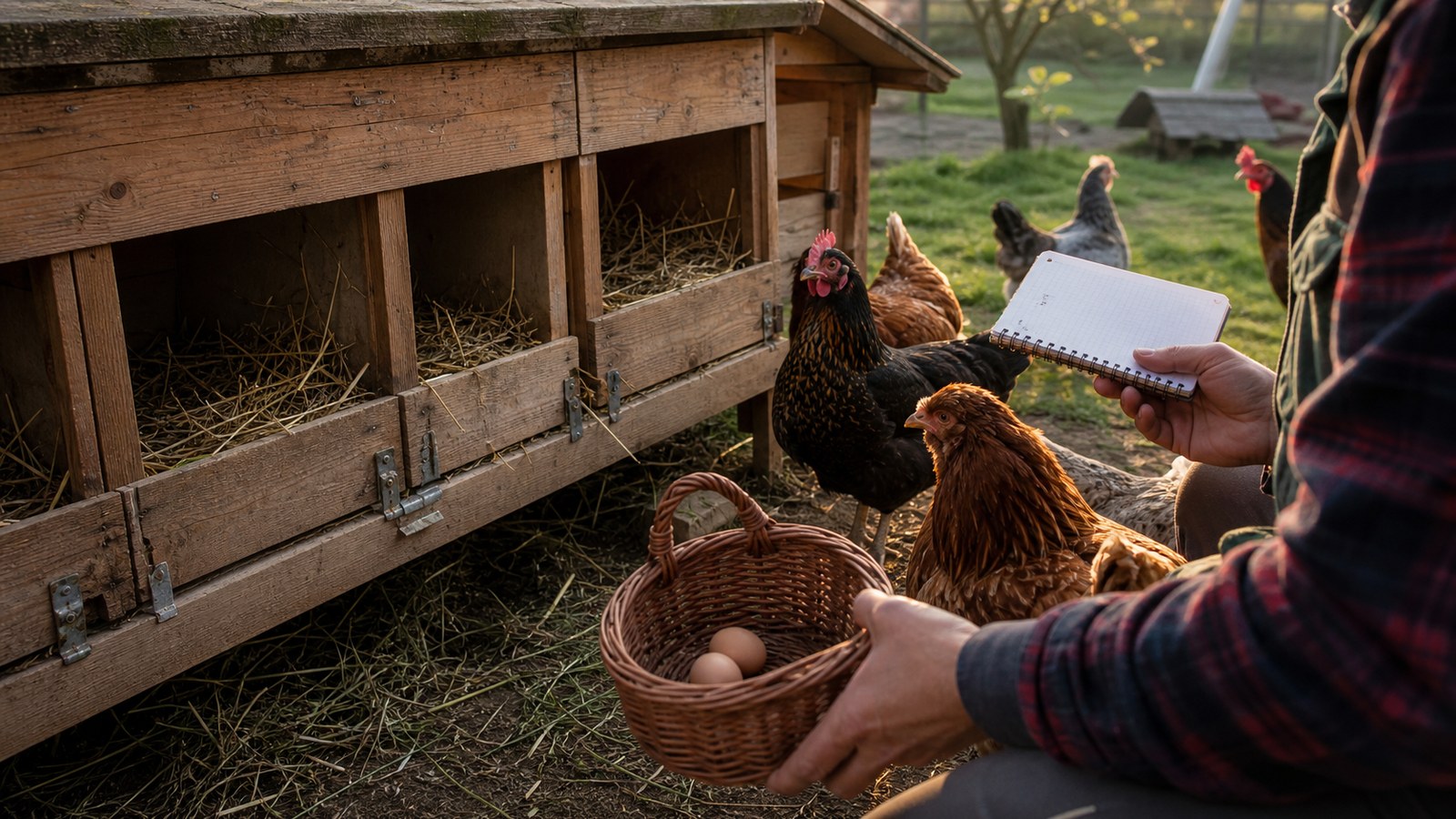
FAQ
Why do chickens open their beaks?
They most often do it to lose heat more quickly through the respiratory tract. If several chickens pant on a hot day, improve shade, fresh water and airflow immediately.
Does chicken panting always mean heat stress?
No. Brief panting can follow chasing or handling. A single bird panting in cool conditions, especially with wheezing, discharge, a blue comb or weakness, needs veterinary assessment.
What should I do first when a chicken is panting heavily?
Move it calmly to a cooler, ventilated place, provide fresh water and minimise stress. Stumbling, lying down, seizures or poor response require urgent veterinary help.
Can I spray chickens with water in hot weather?
Do not plunge a chicken into ice water. You may gently wet the unfeathered legs and comb with cool water, but shade, airflow and constant drinking water matter more. Keep the litter dry.
Why do hens lay fewer eggs in hot weather?
They eat less and use more energy to cool the body, which can reduce laying and shell quality. Monitor recovery after the weather cools and investigate other causes if production stays low.
Sources behind this guide
The practical advice is checked against poultry extension and veterinary material, not just repeated from forum folklore.
Want to describe what is happening in your flock?
Tell me the birds' age, feed, housing and whether the problem affects one hen or the whole flock. The email address appears only after a click so it is not left open for simple scraping bots.
Keep the details before they disappear from memory
Twoja Farma helps you record eggs, feed changes, flock observations and costs. A short note made today is often more useful than a confident guess next week.