When do chickens start laying eggs? Age, first signs and breed chart
 Piotr Markotpoultry keeperFor backyard keepers and small flocks
At first you check the nest box once a day. A week later you are looking three times and wondering whether the pullets are doing it on purpose. Most chickens lay their first egg at 18-24 weeks, but breed, season and body development can shift that window by several weeks.
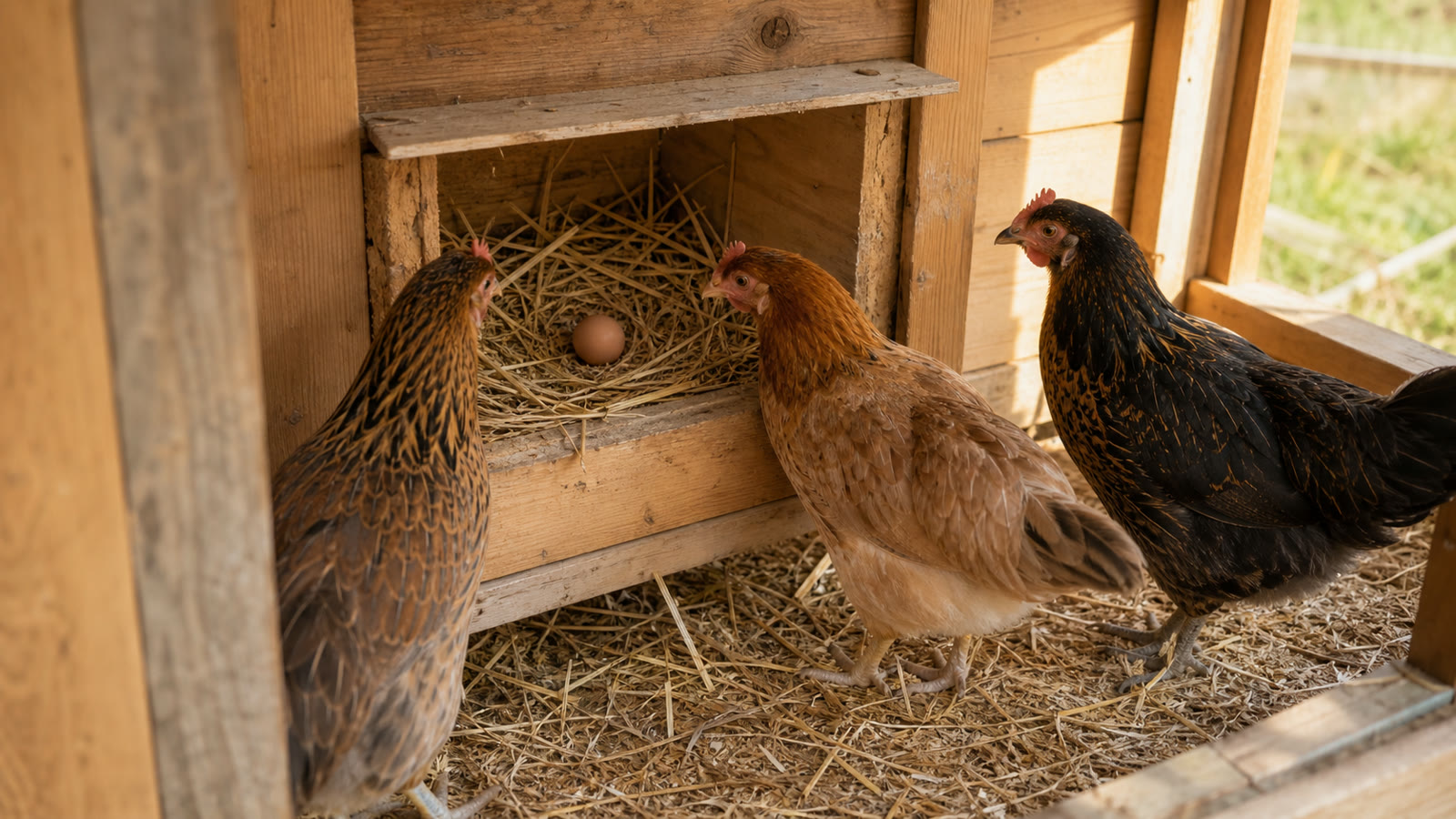
The short answer: usually between four and a half and six months
Most healthy pullets begin laying somewhere between 18 and 24 weeks of age. Early commercial layers and some Leghorn lines may start around 16-18 weeks. Australorps, Sussex and many dual-purpose breeds often need a little longer, while Brahmas, Silkies and other slow-growing or ornamental birds may not produce a first egg until 24-32 weeks. These are useful ranges, not expiry dates printed on a chicken.
A hen does not need a rooster to lay. The rooster is only required if the egg is to be fertile. That simple fact is worth stating because new keepers often wait for eggs, see no courtship in a small all-female flock and assume something is missing. If the pullet is female, mature and healthy, her reproductive cycle can begin without a male anywhere near the coop.
I judge readiness from three things together: age, breed or body type, and visible development. A 21-week commercial brown layer with a bright red comb is a different case from a 21-week Brahma that still looks all legs and feathers. The calendar starts the conversation; the bird gives the better answer.
First-egg age by breed: a working chart for backyard flocks
The ranges below assume pullets have grown steadily, receive a complete ration for their stage, have constant clean water and are not dealing with disease or heavy parasite pressure. A hatchery strain selected for production can start earlier than a large exhibition line carrying the same breed name, so ask the breeder about their own flock rather than treating any online table as a guarantee.
| Breed or type | Usual first-egg age | Practical note |
|---|---|---|
| Commercial laying hybrid | 16-20 weeks | Often early, but body weight and uniform growth still matter. |
| Leghorn | 17-21 weeks | Light, active layers frequently mature before heavy breeds. |
| Rhode Island Red | 18-24 weeks | Production lines tend to be earlier than large traditional lines. |
| Sussex | 20-26 weeks | Season and body development can easily move the date. |
| Australorp | 20-26 weeks | A good laying line can be early; bigger birds may take longer. |
| Araucana or Ameraucana | 20-28 weeks | Blue-egg lines vary considerably between breeders. |
| Marans | 22-28 weeks | Do not rush a slow-growing dark-egg line with excessive light. |
| Silkie | 24-32 weeks | Later maturity and broodiness make a wide range normal. |
| Brahma | 26-32 weeks | A heavy frame must develop before laying begins. |
| Unknown crossbred pullet | 18-28 weeks | Use body size, comb colour and parentage as additional clues. |
Calculator: when might the first egg arrive?
Enter the hatch date and choose a breed type. The result is a sensible window to watch the nest boxes, not a promise made to the day.
The estimate assumes a healthy pullet with suitable feed, water and daylight. Season, body condition and individual development can move it.
Six signs that the first egg is getting close
The most obvious change is usually the comb. It becomes larger, warmer-looking and distinctly red rather than the pale pink of a younger bird. Wattles develop at the same time. This is useful, but less dramatic in breeds with pea combs, dark skin or heavy crests, so I never rely on colour alone.
A nearly ready pullet often starts inspecting nest boxes. She steps in, scratches the bedding, turns around, leaves, returns and may sit without producing anything. Her behaviour around people can change too: many pullets crouch or squat when a hand approaches over their back. That submissive squat is associated with sexual maturity and often appears a few days or weeks before the first egg.
The pelvic bones gradually become more flexible and spaced, while the vent looks larger, moist and less tight than in an immature pullet. This check must be gentle and is easiest when comparing birds of the same age. Other clues are a fuller abdomen, louder pre-lay chatter and growing interest in secluded corners. No single sign gives an exact date, but several signs arriving together are persuasive.
- comb and wattles become redder and more developed
- the pullet repeatedly explores or rearranges nest bedding
- she squats when approached or touched over the back
- pelvic spacing and the appearance of the vent begin to change
- she looks for quiet corners and may practise sitting
- her voice and daily routine become more like those of the laying hens
Why hatch date and season can change the answer
Two pullets hatched from the same parent flock can reach 20 weeks in very different light conditions. A February chick matures as spring days lengthen. A late-July chick reaches the same age as autumn days shorten. The second bird may be physically close but wait until daylight and body reserves make laying less demanding. That is why ‘my last batch laid at five months’ is useful history, not a contract for every batch.
In northern climates, late-autumn and winter maturity commonly delay the first egg. Artificial lighting can influence reproduction, but I would not use it to force undersized pullets into production. Commercial lighting programmes are tied to target body weights and flock uniformity. In a backyard coop, a timer added without a growth plan can make the calendar look better while asking too much of birds that are not ready.
Heat waves also matter. Pullets eat less when they are hot, and the lost feed intake is lost protein, energy, minerals and vitamins. A bird reaching maturity during prolonged heat may pause even though the days are long. Shade, cool clean water and ventilation are more sensible interventions than adding another hour of light.
Feed the pullet in front of you, not the egg you hope to find
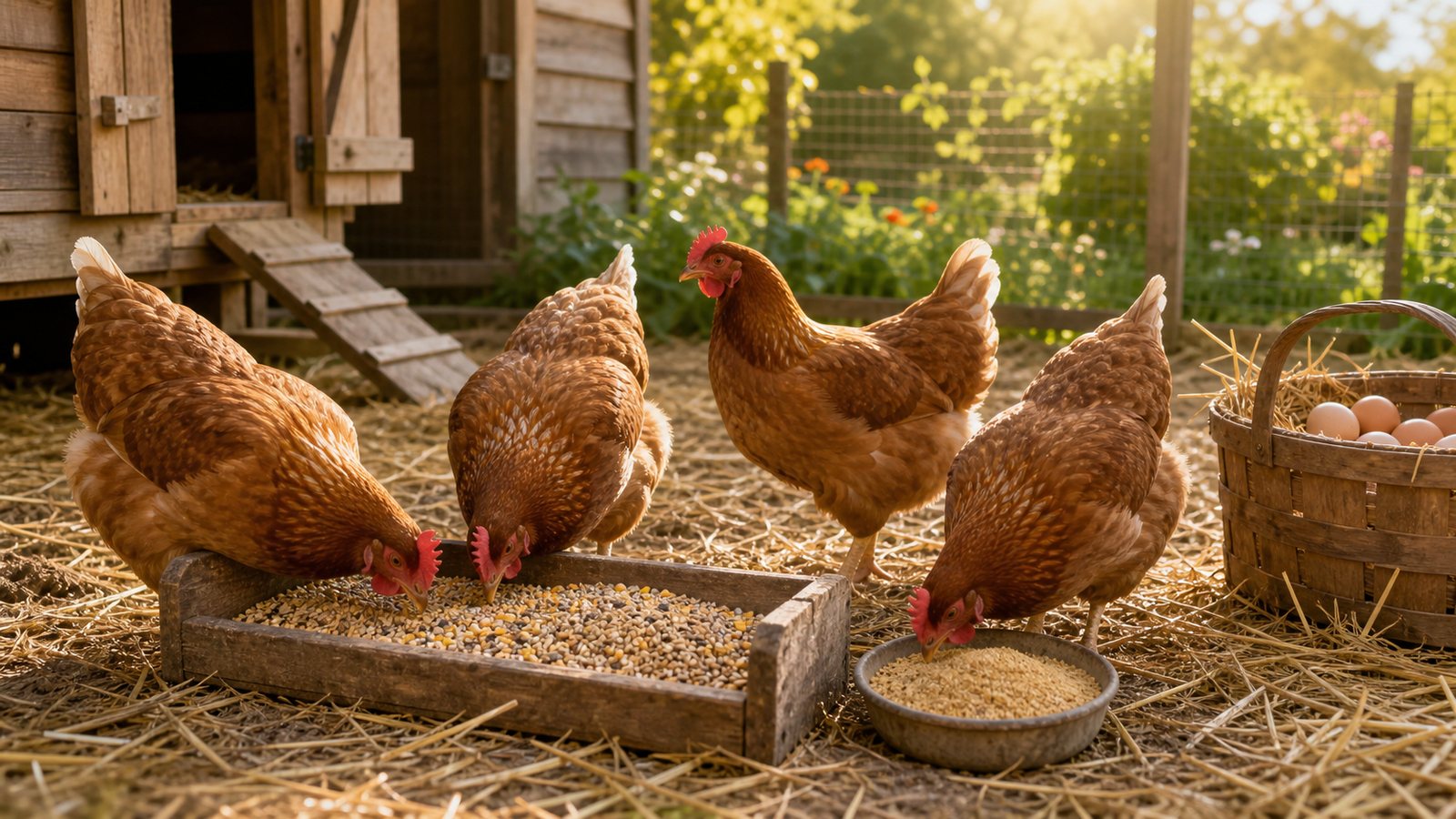
A growing pullet needs a complete grower or developer ration appropriate to her age. Switching to a high-calcium layer feed far too early is not a shortcut to the first egg. Layer feed is designed for birds already approaching or in production, and the right transition depends on the feed maker's guidance, development and the first signs of lay. If birds of very different ages share one run, feeding becomes a management problem rather than a bag-label problem.
I check whether feed is genuinely complete, not a concentrate that should have been mixed with grain. I also look at access: timid pullets can be the same age as the dominant birds yet grow more slowly because they only reach the feeder after the best part of the day. More feeder space or a second station can do more than any supplement.
Clean water is non-negotiable. Egg contents are mostly water, but even before laying, dehydration cuts feed intake and affects development. In freezing weather the drinker must remain usable; in summer it needs shade and frequent refreshment. Treats and kitchen scraps should stay a small part of the diet so they do not dilute the balanced ration just when the reproductive system is preparing to work.
Prepare the nest boxes before a pullet chooses her own
A young hen does not read the neat sign above your nest box. If a dark feed bin, hay stack or corner under the shed feels safer, she may lay there instead. Open the nest boxes before the expected window, keep them clean and dim, and block the tempting places you cannot inspect. One nest for roughly four hens is a comfortable backyard starting point, although flock behaviour matters more than perfect arithmetic.
A little clean nesting material and a washable dummy egg can make the purpose obvious. I do not lock a frightened pullet inside a box or keep moving her while she is trying to settle. The aim is to make the correct place the easiest place. Collect regularly and check hidden corners for at least the first weeks, because ‘she has not started’ sometimes means ‘she has built a private clutch behind the mower’.
Roosts should be clearly separate and preferably higher than nest entrances, while the boxes should not become the flock's sleeping quarters. Droppings and damp bedding make early eggs dirty and encourage poor habits. If adults already sleep in the nests, correct that routine before the pullets begin laying, not after every box needs cleaning each morning.
The first eggs can be tiny, long, soft or simply odd
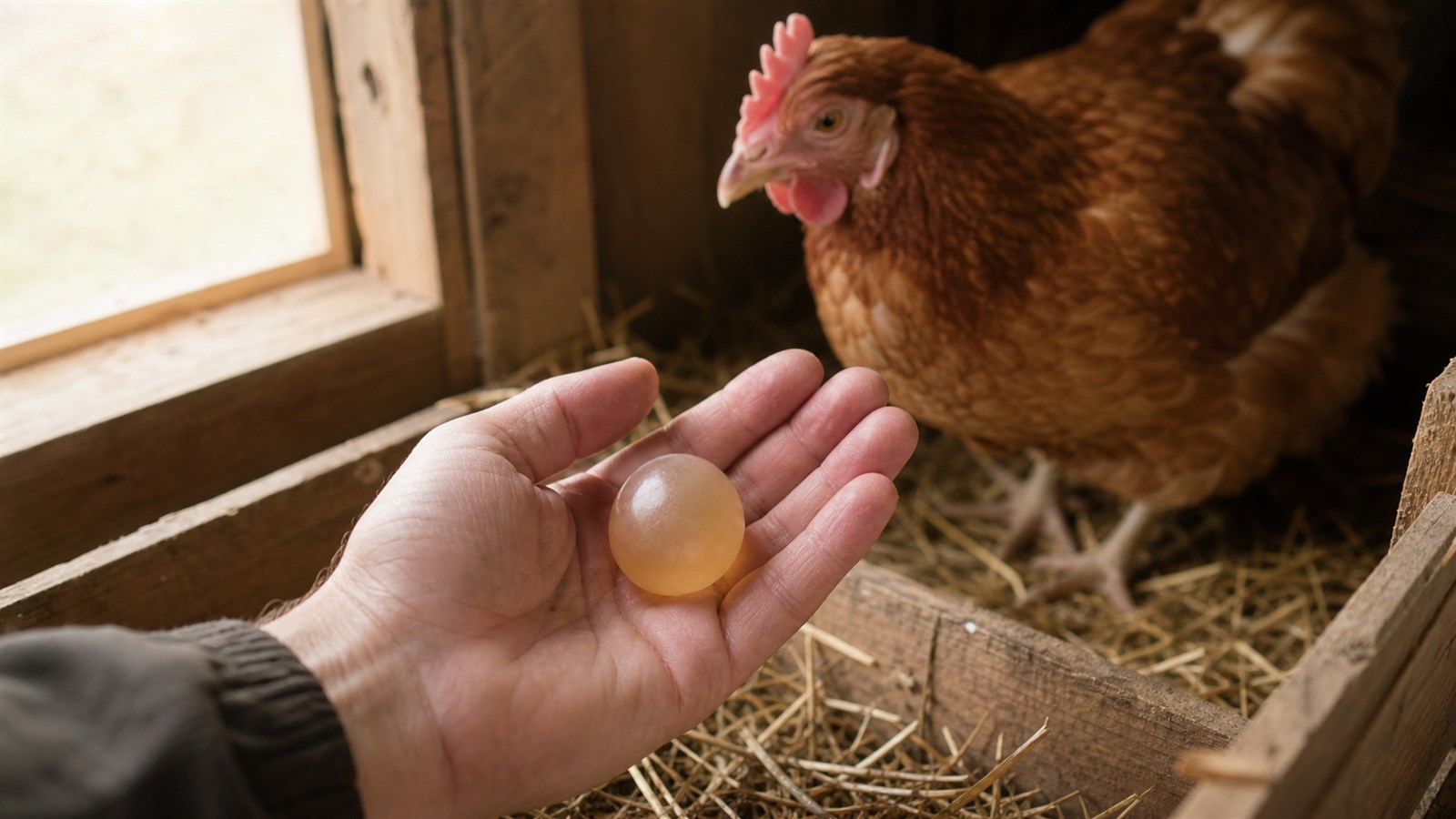
A pullet's first egg is often smaller than the eggs she will lay later. The reproductive tract is starting a complicated sequence involving yolk release, albumen, membranes, shell formation and timing. An occasional unusually long egg, wrinkled shell, soft shell or yolkless ‘fairy egg’ can occur while that system settles. One strange egg from a bright, active pullet is a note for the diary, not an emergency by itself.
Repeated shell-less eggs, obvious straining, a penguin-like stance, swollen abdomen, weakness or loss of appetite are different. Those signs deserve prompt assessment and, where available, an avian or poultry veterinarian. Throwing extra calcium at every problem is not a diagnosis: shell quality also depends on feed intake, vitamin D, stress, disease and the bird's ability to use nutrients.
The laying rhythm is irregular at first. A pullet may lay once, skip two days and then surprise you again. She may choose the floor for her first attempt and use the box next time. Photographing or weighing the first five eggs gives a much fairer picture than judging her future output from the very first shell.
A six-month-old pullet is not laying: check these in order
First confirm the basics: actual hatch date, likely breed and sex. Mislabelled ages are common when birds pass through several owners, and late-feathering cockerels can fool a beginner for longer than anyone wants to admit. Then look for eggs elsewhere. Search behind stored equipment, under shrubs, inside hay and in any space a determined hen can reach.
Next assess body condition and growth. A pullet that is noticeably smaller, thin across the breast or repeatedly excluded from feed is not simply ‘lazy’. Check the ration, feeder access, water and droppings. Look for mites or lice after dark and discuss worming or faecal testing with a local professional rather than dosing blindly. Respiratory noise, diarrhoea, lameness, pallor or persistent lethargy changes the question from timing to health.
Finally put the season back into the picture. A 25-week Brahma in December can be normal; a well-grown 28-week commercial layer with a red comb in June deserves closer investigation. I change one thing at a time and record it. If feed, lighting, supplements and housing all change in one weekend, there is no way to learn what actually mattered.
- verify hatch date, breed or type and sex
- search for a hidden nest before assuming there are no eggs
- compare body weight and breast condition with flock mates
- check that every pullet can reach complete feed and fresh water
- inspect skin and perch areas for external parasites, especially at night
- note daylight, heat, cold, recent moves and bullying
- seek veterinary help if delayed laying comes with illness or poor condition
Common first-egg myths that create more worry than eggs
The first myth is that a rooster starts laying. He does not. The second is that all sisters should begin in the same week. They rarely do, even with identical feed, because individual maturity and pecking-order stress differ. The third is that a hen must lay every day as soon as she starts. Early cycles are often uneven, and breed expectations should be measured over months rather than the first seven days.
Another myth says red pepper, a strong vitamin mixture or a special treat will ‘switch on’ a pullet. A balanced ration and sound conditions support normal development; no kitchen trick can safely replace maturity. Excess treats can actually delay progress by diluting the nutrients in complete feed. I would rather improve feeder access and weigh a doubtful bird than chase a colourful shortcut.
Finally, an egg song is not proof that the singer laid the egg. Hens announce nests, complain about occupied boxes and join each other's noise. If knowing the individual matters for breeding, use trap nests, short supervised periods or another reliable identification method instead of trusting the loudest bird in the yard.
What I record in a small flock
I write down the hatch date or best estimate, breed or parent group, first obvious comb change, first squat and the date of the first egg. I also note the egg's colour and weight. This takes less than a minute, yet it turns the next batch from guesswork into a comparison with birds reared in the same coop, climate and feeding system.
Records reveal details memory smooths over. Perhaps every late-summer hatch waited through winter, one line consistently matured two weeks later, or a second feeder improved uniformity. They also stop us blaming a breed for a management issue. A table from another country gives a starting range; your own repeated dates explain your flock.
Keep the notes modest. You do not need a laboratory sheet for each hen. Date, age in weeks, visible signs, feed change and first egg are enough to answer most practical questions later. If a health issue appears, add weight, droppings, treatment and outcome so the first-egg record does not hide the bigger story.
| What to record | Why it helps |
|---|---|
| Hatch date or estimated age | Turns a vague ‘five months’ into a usable week count. |
| Breed, cross or parent pen | Lets you compare like with like in future seasons. |
| Comb, squat and nest interest | Shows whether physical maturity is progressing. |
| Feed and major housing changes | Explains delays linked to stress or restricted intake. |
| First egg date, colour and weight | Creates a reliable baseline for that hen or line. |
My practical conclusion
For most backyard pullets, start watching seriously from 18 weeks and expect the first egg somewhere before 24 weeks. Give heavy and ornamental breeds more room on the calendar. If several maturity signs are present, the nests are ready and the bird is in good condition, patience is usually the correct tool.
If the expected range has passed, do not jump straight to supplements or artificial light. Verify age and sex, hunt for a hidden nest, check body condition, complete feed, water, parasites, stress and season. A healthy late pullet is often simply late; a thin or unwell pullet is asking a different question.
The first egg feels like a finish line, but it is really the beginning of another observation period. Let the young hen settle, expect imperfect shells and record what happens. Next year, when another batch keeps you walking to an empty nest box, you will have an answer built from your own flock rather than only from an internet average.
Piotr Markot
poultry keeper. I keep poultry myself and write about the checks that actually help around a small coop, without pretending that every odd egg or missing feather has one magic answer.
Read next on the blog
See all guides →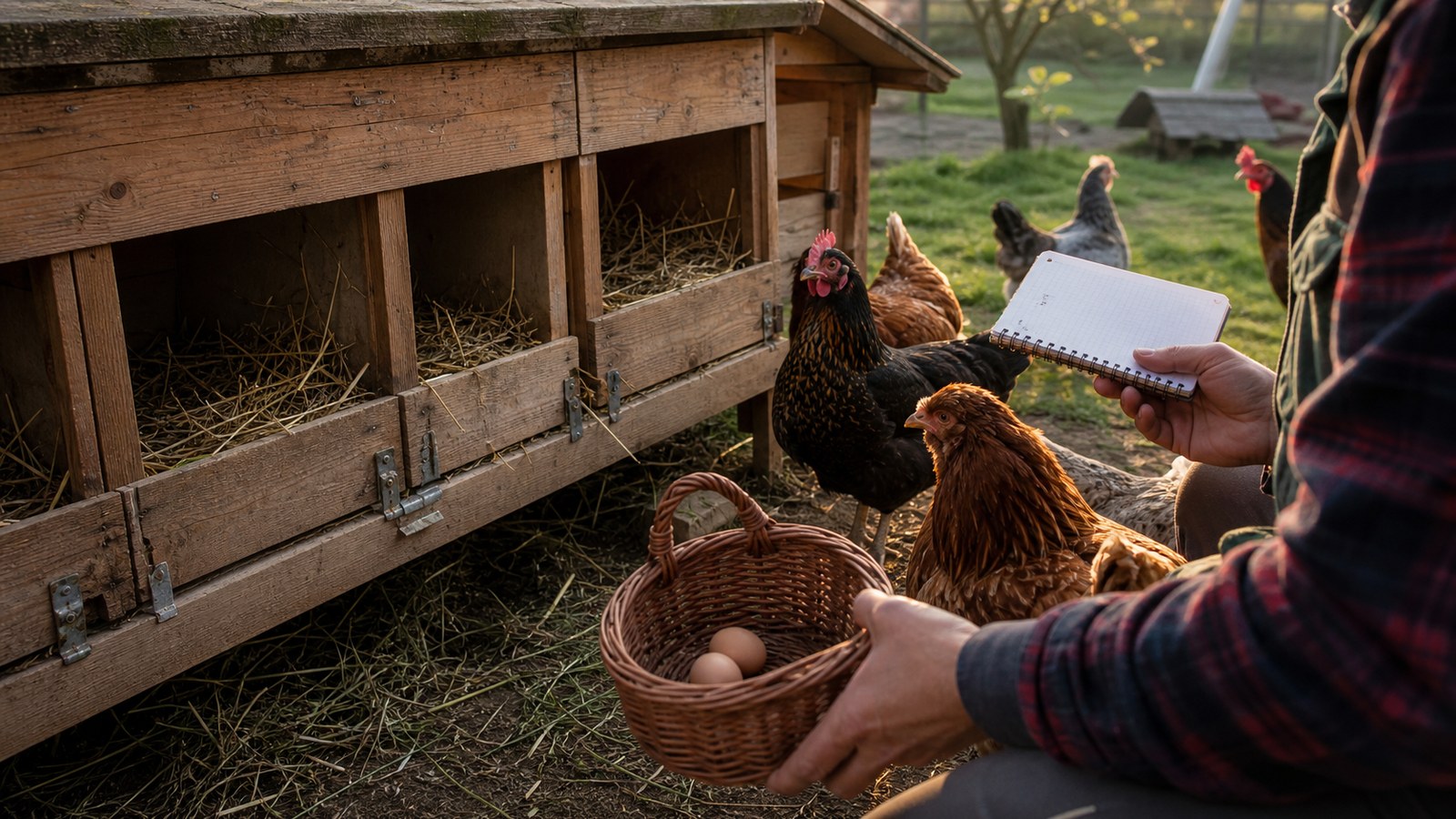
FAQ
At what age do chickens lay their first egg?
Most pullets begin at 18-24 weeks, or roughly four and a half to six months. Early laying strains can start sooner; heavy and ornamental breeds often take longer.
Does a hen need a rooster to lay eggs?
No. Hens lay without a rooster. A rooster is only needed for fertile eggs that can develop into chicks.
How can I tell that a pullet is close to laying?
Look for a redder comb and wattles, interest in nest boxes, squatting, changes around the vent and pelvis, and more pre-lay vocal behaviour.
Why is my six-month-old chicken not laying?
She may be a late breed, maturing in short winter days, under target body weight, eating poorly or using a hidden nest. Confirm sex and check health too.
Can the first egg be very small or have a soft shell?
Yes, an occasional tiny, unusual or soft first egg can occur while the reproductive system settles. Repeated problems or an unwell bird need investigation.
Should I switch to layer feed before the first egg?
Follow the feed manufacturer's stage guidance and the bird's development. Moving young pullets to a high-calcium ration far too early is not a safe way to force laying.
Sources behind this guide
The practical advice is checked against poultry extension and veterinary material, not just repeated from forum folklore.
- University of Minnesota Extension - Raising chickens for eggs
- University of Minnesota Extension - Raising layer chicks and pullets
- Penn State Extension - Modern egg industry: pullet rearing and egg production
- Merck Veterinary Manual - Management of laying chickens
- Merck Veterinary Manual - Laying and reproduction in backyard poultry
- Merck Veterinary Manual - Nutritional requirements of poultry
- Hy-Line Brown Performance Standards Guide
Want to describe what is happening in your flock?
Tell me the birds' age, feed, housing and whether the problem affects one hen or the whole flock. The email address appears only after a click so it is not left open for simple scraping bots.
Keep the details before they disappear from memory
Twoja Farma helps you record eggs, feed changes, flock observations and costs. A short note made today is often more useful than a confident guess next week.