How many eggs does a chicken lay a day, week and year?
 Piotr Markotpoultry keeperFor backyard keepers and small flocks
A healthy laying hen can produce at most about one egg in a day, but she will not do that 365 days without a break. Breed, age, daylight, molt, heat, nutrition and individual variation mean that a flock is better planned with a lay rate than the promise of one hen and one egg every day.
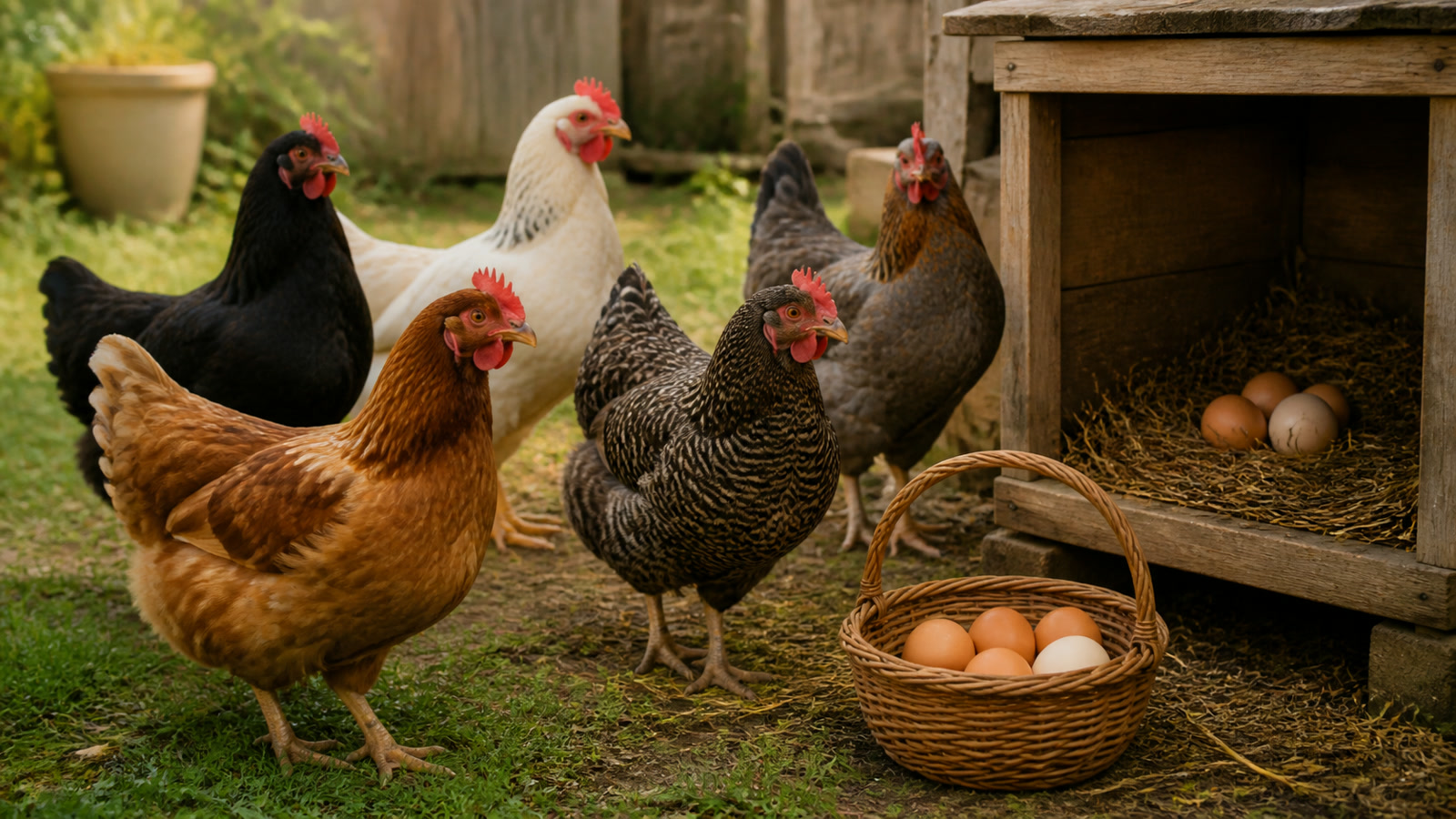
The short answer: usually not one egg every single day
A good young layer may give five or six eggs in a strong week. A heavier breed, an older hen or a bird in molt will normally give fewer. Forming an egg takes roughly 24–26 hours, so laying time moves later and a rest day eventually appears after a run of eggs.
Two eggs from one hen within a calendar day can happen, especially while a pullet's cycle is settling, but it is unusual and should never underpin a flock plan. A double-yolk egg is still one egg: two yolks entered the reproductive tract close together.
- a sensible biological maximum for planning is one egg per hen per day
- a productive young hen in season often lays about five or six eggs per week
- ten hens at a 70% lay rate average about seven eggs per day
- a monthly record tells you far more than one excellent or disappointing morning
Egg calculator for your flock
Enter the number of laying hens and a realistic lay rate. This is a forecast, not a promise.
Start with 70%. After two weeks of records, replace the estimate with your own rate.
Why a hen cannot reliably lay two eggs every day
After ovulation, the yolk travels through the oviduct while albumen, membranes and finally shell are added. Shell formation takes the largest part of the cycle. The whole process is slightly longer than one day, and the next ovulation begins another cycle. A hen can therefore lay progressively later for several days and then skip a day.
Finding two eggs in one nest does not prove that one hen laid both. Hens commonly share a favorite nest box. Reliable identification needs observation, a brief and properly managed separation, or an identification system—not a guess based on where the eggs were found.
How many eggs will 5, 10 or 20 hens produce?
Flock keepers use lay rate: eggs collected divided by the number of hens actually of laying age, multiplied by 100. Seven eggs from ten layers is a 70% lay rate. Do not include the rooster, chicks or pullets that have not started laying in that denominator.
The table uses 70%, a useful starting estimate for a mixed backyard flock. Young commercial-type layers at peak can exceed it, while older heritage hens during short winter days can sit well below it.
| Laying hens | Daily at 70% | In 7 days | In 30 days | In one year |
|---|---|---|---|---|
| 1 | 0.7 egg | about 5 | about 21 | about 256 |
| 5 | 3.5 eggs | about 25 | about 105 | about 1,278 |
| 10 | 7 eggs | about 49 | about 210 | about 2,555 |
| 20 | 14 eggs | about 98 | about 420 | about 5,110 |
| 50 | 35 eggs | about 245 | about 1,050 | about 12,775 |
How to calculate the true lay rate of your flock
Use eggs ÷ active laying hens × 100. If twelve hens produce eight eggs today, the rate is 66.7%. One day is a small sample, so add seven or fourteen days. Twelve hens provide 84 hen-days in a week; 62 eggs divided by 84 gives a weekly rate of about 73.8%.
A percentage is not a score for treating each bird like a machine. It exposes a trend. A gradual fall with shortening daylight or molt has a coherent explanation. A sudden fall after a feed change, water failure or stressful event gives you a clear place to start checking.
- count only females that have reached laying age
- record cracked, eaten and floor-laid eggs as losses rather than making them disappear
- compare equal periods, preferably complete weeks
- note feed changes, heat, cold, treatment, broodiness and molt
Age changes the answer more than comb size does
The first small, irregular eggs arrive after sexual maturity, depending on breed and season. Once her cycle settles, a pullet moves into her strongest period. She can still lay very well in the following season and often produces larger eggs, but breaks generally lengthen and annual totals decline with later years.
No single age table honestly fits every strain. A production hybrid, Leghorn, Australorp, Marans and Silkie have different purposes and rhythms. Record hatch dates by group. Without age information, a normal decline in a four-year-old hen is easily blamed on the latest bag of feed.
Breed and purpose: practical ranges for planning
Hatchery figures usually describe young birds under good management. They should not be copied directly onto a mixed flock containing broody birds, older hens and a natural winter pause. These ranges help with planning; they are not a guarantee for an individual bird.
| Hen type | Practical weekly output in a good period | How to interpret it |
|---|---|---|
| Young high-output hybrid | about 5–6 eggs | high output with correspondingly strong nutrition and health demands |
| Light egg breed | about 4–6 eggs | line, daylight and season make a substantial difference |
| Dual-purpose breed | about 3–5 eggs | a balance of eggs, body size and hardiness |
| Heavy or ornamental breed | about 2–4 eggs | broodiness and a slower rhythm are not automatically a problem |
When fewer eggs are normal—and when to inspect the flock
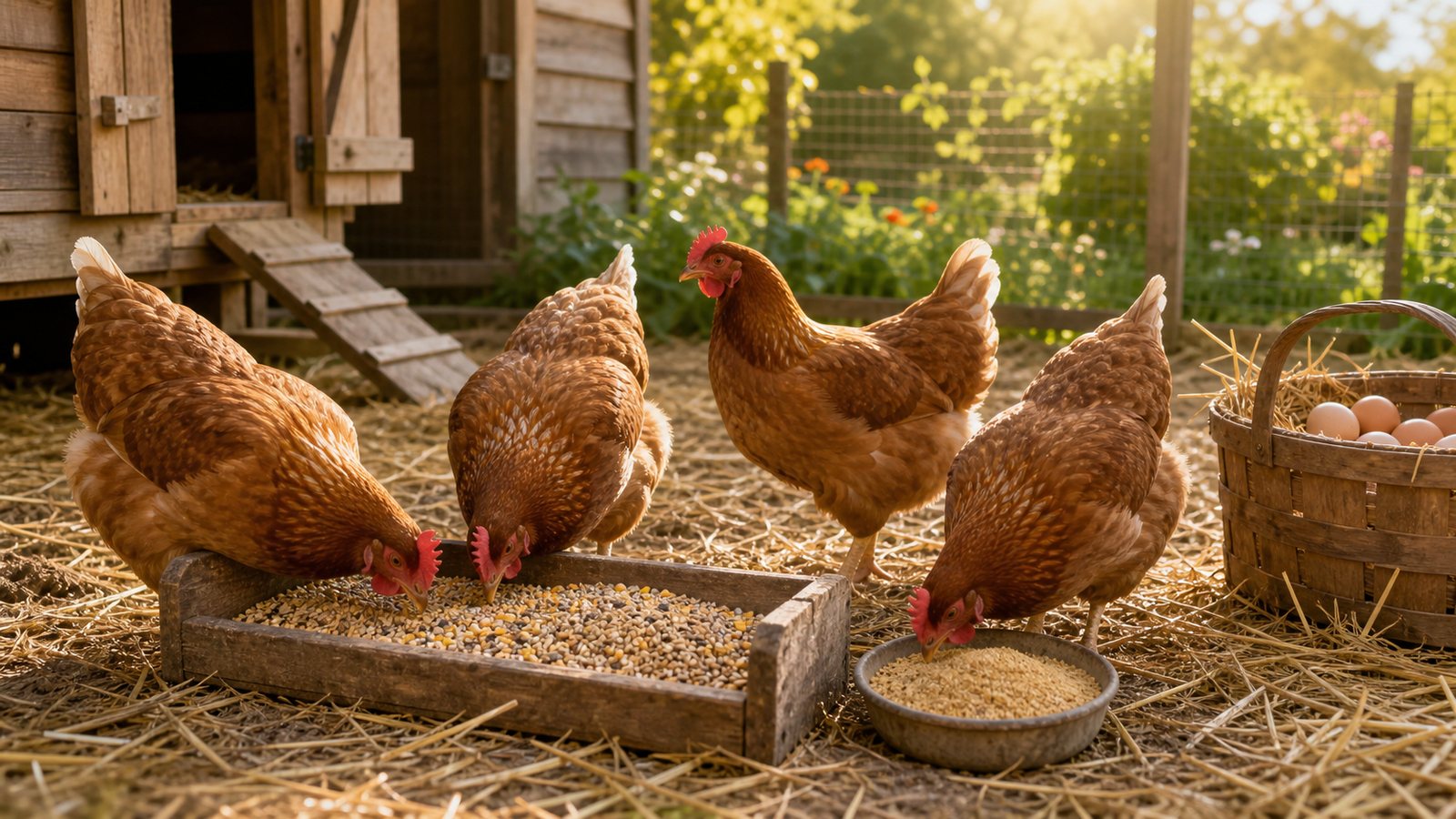
A drop can be normal during molt, short days, broodiness, ageing or after a move. Do not explain everything away as weather, though. Water is the first check: a frozen, empty or dirty drinker can affect production quickly. Next come complete feed, actual appetite, body condition and parasite signs.
A fall combined with lethargy, breathing difficulty, persistent diarrhea, blood, abdominal swelling, abnormal stance or several ill birds needs prompt attention. Lay rate cannot diagnose disease. It is an early signal to combine with physical and behavioral observations and, when warning signs appear, veterinary advice.
- confirm clean water remains available all day
- measure complete feed use instead of judging the feeder by eye
- look for hidden nests and signs of broken, eaten or stolen eggs
- check both hens and housing for parasites and molt
- compare the same flock with its result one week and one month earlier
Why counting the basket once a week gives a false picture
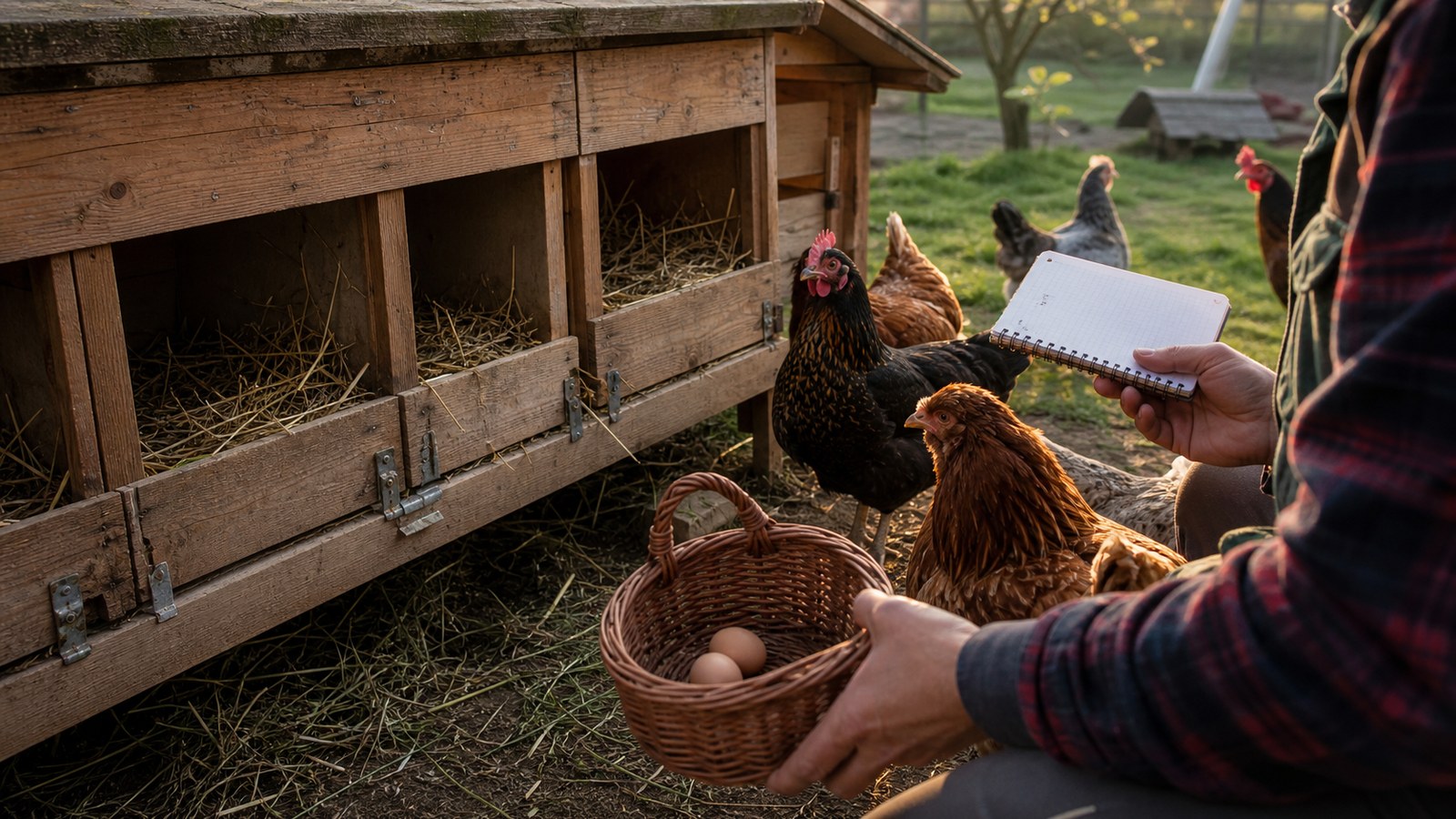
Without a daily entry, eggs used at home, sold, broken or set in an incubator vanish from memory. One entry is enough: collected eggs, losses, sales, home use and a short flock note. After a month you can calculate an average, locate the exact start of a drop and compare groups.
Different age groups are best recorded separately. Ten young hybrids and ten older purebred hens may make a respectable basket together while the combined figure hides which group is maintaining production. Separate records also reveal feed cost per egg and support realistic customer promises.
How many hens do you need for your household?
First count normal weekly household use, not the biggest holiday baking week. Then assume a cautious 60–70% lay rate for a mixed flock and allow for seasonal gaps. A household using twenty eggs per week mathematically needs about five hens at 70%, but six or seven offers a safer margin through winter and ageing.
Do not buy a dozen extra birds based on one excellent spring week. Every hen brings years of feed, space, care and an old-age plan. A small margin and gradual renewal of part of the flock are easier to manage than one large purchase followed by all hens declining at the same time.
- record average household egg use for a normal week
- divide by seven and then by your assumed lay rate
- round up and include a modest seasonal buffer
- check space, feed cost and local rules before buying birds
Three mistakes that ruin every egg forecast
The first is counting every bird as an active layer. The second is multiplying one excellent day by 365. The third is changing feed, lighting and supplements together after a dip. You then cannot know what helped or harmed. A useful forecast comes from full weeks, known group ages and one management change at a time.
Do not chase maximum output at any cost. Hens need rest and feather renewal, while extra light cannot repair disease, underfeeding or poor housing. A small flock should aim for a stable result from healthy birds, not a record in one month.
Piotr Markot
poultry keeper. I keep poultry myself and write about the checks that actually help around a small coop, without pretending that every odd egg or missing feather has one magic answer.
Read next on the blog
See all guides →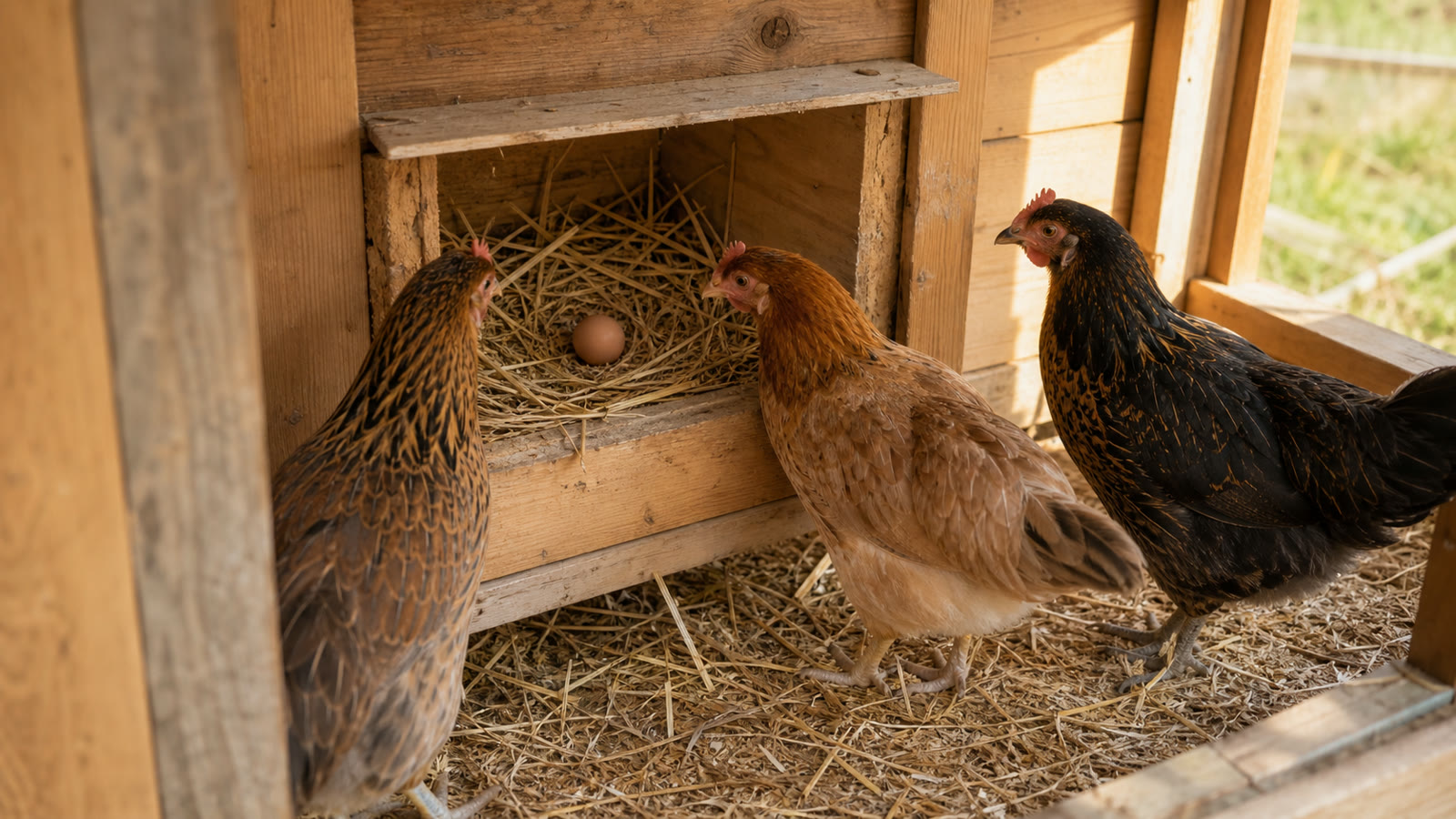
FAQ
Can a chicken lay two eggs in one day?
It can happen exceptionally, especially while a pullet's cycle is settling, but the normal biological maximum is about one egg per day. Never plan on two daily eggs from one hen.
How many eggs does a good hen lay per week?
A young productive layer in a strong period often produces about five or six eggs. Breed, age, season, broodiness, molt and health can change that substantially.
How many eggs should ten hens lay each day?
At a 70% lay rate they average about seven eggs per day. There may be five one day and nine the next, so the complete weekly total is more useful.
Does a rooster make hens lay more eggs?
No. A rooster is required to fertilize hatching eggs, but he neither starts nor increases egg production.
How do I calculate laying percentage?
Divide eggs by hens of laying age and multiply by 100. For a weekly rate, divide total eggs by hens multiplied by seven, then multiply by 100.
Sources behind this guide
The practical advice is checked against poultry extension and veterinary material, not just repeated from forum folklore.
- University of Kentucky Poultry Extension — How many eggs can a hen lay in one day?
- University of Kentucky Poultry Extension — Raising chickens for egg production
- University of Minnesota Extension — Raising chickens for eggs
- Penn State Extension — Successfully raising a small flock of laying chickens
Want to describe what is happening in your flock?
Tell me the birds' age, feed, housing and whether the problem affects one hen or the whole flock. The email address appears only after a click so it is not left open for simple scraping bots.
Keep the details before they disappear from memory
Twoja Farma helps you record eggs, feed changes, flock observations and costs. A short note made today is often more useful than a confident guess next week.