Why do chickens eat their eggs, and how can you stop the habit?
 Piotr Markotpoultry keeperFor backyard keepers and small flocks
Egg eating usually starts with an opportunity, not a villainous hen plotting breakfast. A cracked egg teaches the lesson; a bright crowded nest and slow collection let the lesson spread.
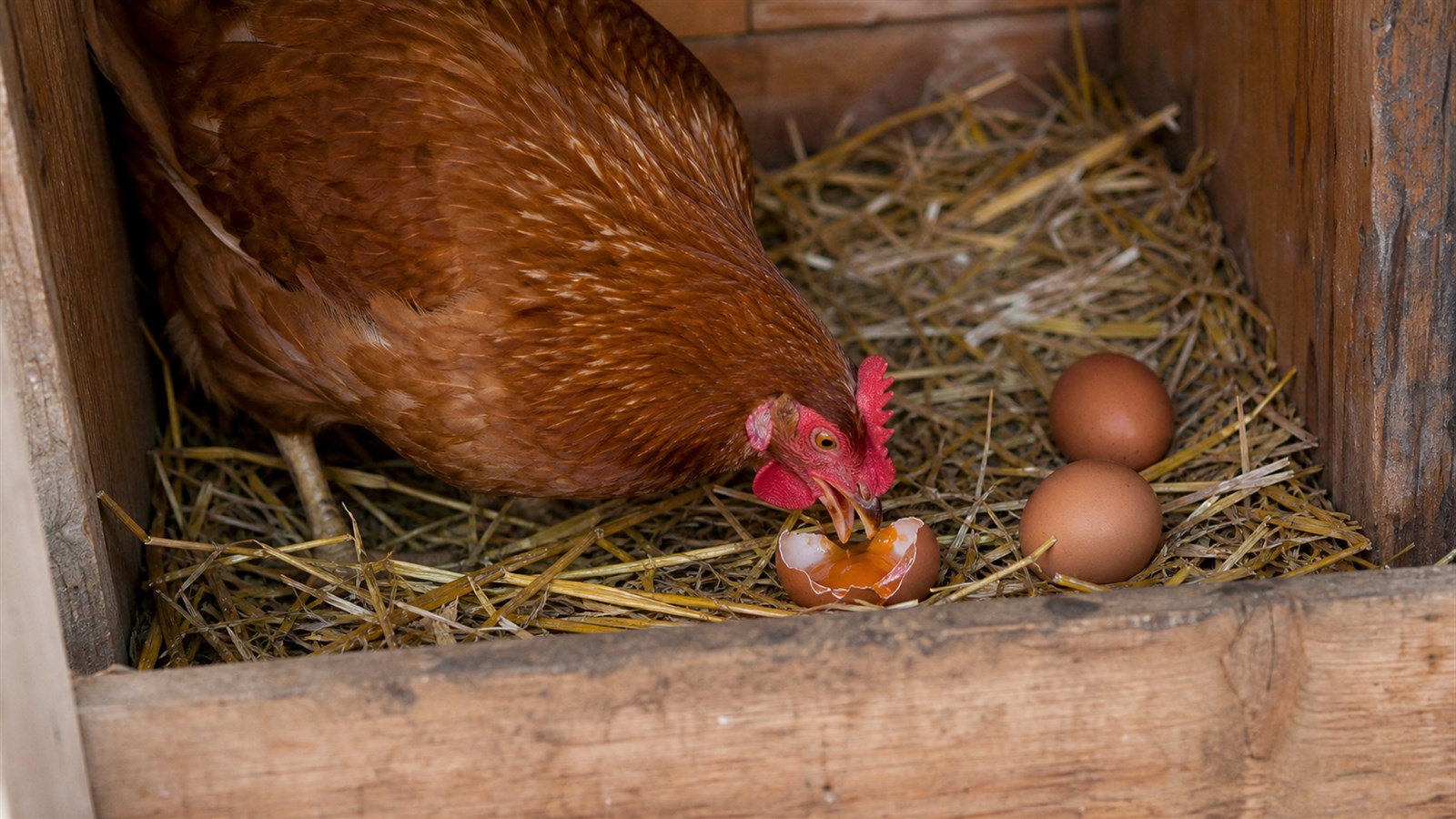
The first cracked egg is often an accident; the next one may be a lesson
A hen steps on a thin shell, an egg lands on bare timber, or two hens squeeze into the same box and something breaks. Warm yolk appears, and chickens do what chickens do: they investigate with their beaks. Once a bird learns that the object in the nest contains rich food, she may start testing intact eggs. Other hens can copy her.
That is why I act quickly without turning the coop upside down. Remove every broken egg and dirty patch, collect more often and fix the reason eggs are cracking. Punishing birds while leaving the same bright, hard, crowded nest in place is theatre, not a solution.
Are the hens really eating them?
A missing egg is not proof. Snakes, rats, raccoons, crows and other visitors leave different clues depending on where you live. Hens may also lay in a hidden nest under a shed or behind hay. Count what you actually collect, search the quiet corners and inspect the coop before deciding that your flock has become a gang of egg thieves.
Egg eating commonly leaves shell fragments, wet nesting material, yolk on another egg, or a neat pecked hole that becomes larger. Dried yolk on a hen's beak or head can be a clue, although one messy face is not a courtroom conviction. A cheap trail camera or a phone recording from a safe position can settle the question without hours of staring at the nest boxes.
Quick diagnosis at the nest box
| Clue | What it suggests |
|---|---|
| Wet bedding and shell chips | An egg probably broke in the nest and was eaten or trampled. |
| Small hole in an otherwise intact egg | A hen may be testing or opening eggs deliberately. |
| No shell, no mess, eggs vanish overnight | Check for rats, snakes or other predators before blaming hens. |
| Eggs found outside the boxes | The hens may dislike the nest location, bedding, light or access. |
| Cracks on the same side of many eggs | Look for a hard landing, exposed screw, steep lip or crowded box. |
Why hens start eating eggs
The common starting points are fragile shells, overcrowded or badly designed nest boxes, eggs left for hours, hunger or an unbalanced ration, boredom and a bird that has already learned the trick. Bright light makes eggs easy targets. A hard floor makes breakage more likely. Too few boxes create pushing and double occupancy.
Do not reduce the whole issue to ‘protein deficiency’. Nutrition matters, but throwing mealworms at the flock will not repair a screw that punctures every third egg. Work through the setup in order: shell quality, nest condition, collection routine, complete feed, enrichment and finally the individual bird.
Make the nest a quiet place to lay, not a breakfast table
A nest should be darker than the main coop, dry, easy to enter and lined so an egg lands softly. Roughly one conventional box for every four to five hens is a useful starting point, but flock preference matters: ten boxes are no help if every hen wants the same one. Watch where the queue forms.
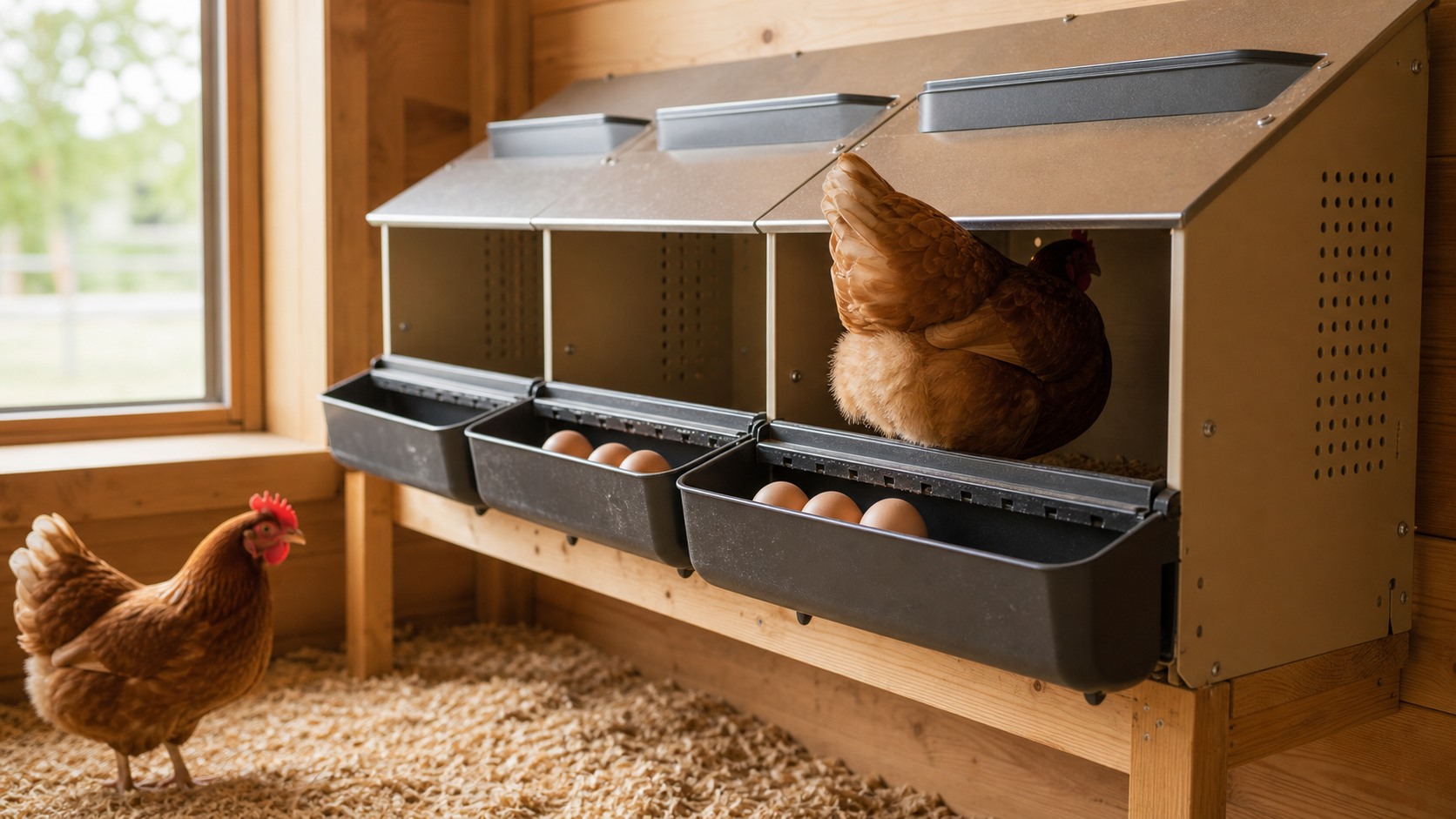
Block nest-box sleeping, because manure and night-time crowding lead to dirty, broken eggs. Remove sharp edges and exposed fixings. If hens lay on the floor, make the proper box more inviting and the floor corner less inviting. The guide to roll-away nest boxes explains when a sloped collection tray is genuinely useful and when training the hens matters more than the equipment.
Collect more often, especially while breaking the habit
During a problem period I collect at least morning, midday and late afternoon, more often if the flock lays in a tight window. Every hour an egg sits in front of a practiced egg eater is another chance for rehearsal. Frequent collection is not glamorous, but it immediately removes the reward.
Keep a simple count. If twelve hens normally give eight eggs and you find five plus one wet nest, that is useful information. If collection rises after you change the routine, you know access time mattered. If eggs still vanish within minutes, a camera and individual identification become more important.
Fix fragile shells instead of blaming behaviour alone
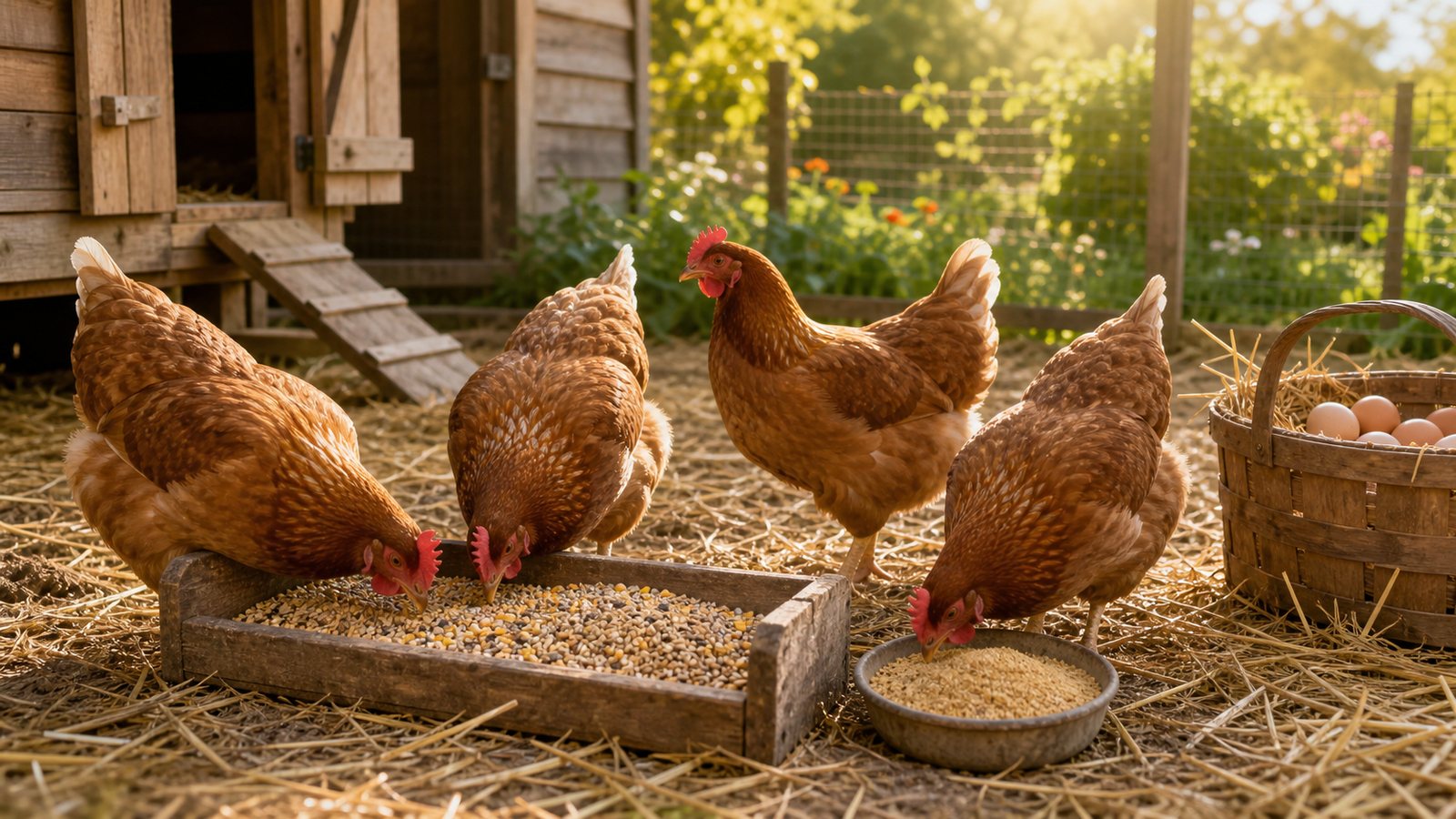
Thin or shell-less eggs break more easily and start the cycle. Make complete layer feed the main ration, keep clean water available and offer adult layers an appropriate calcium source separately. Scratch grain and kitchen scraps can quietly dilute the diet even when the feeder looks full.
If you are finding rubbery eggs or eggs held only by membrane, read the companion guide on soft-shelled eggs in chickens. Repeated shell trouble, several affected hens or other symptoms require more than a nest-box redesign.
Give busy beaks a better job
Confined hens need places to scratch, peck and explore. Deep dry litter, a hanging leafy vegetable, scattered feed in clean bedding, perches and a safe outdoor run can redirect normal foraging behaviour. Enrichment is not a magic curtain you hang over poor housing; it works when space, feed and nest design are already reasonable.
Change small items rather than creating a theme park overnight. A pile of leaves, a branch or a tray of loose substrate can hold attention. If birds spend the whole wet winter indoors, refresh those options before frustration appears as feather pecking or nest-box trouble.
How I identify the egg eater
I look for a bird that visits after other hens lay, watches the nest boxes closely or carries dried yolk. A camera is more reliable than guessing by rank or personality. Sometimes the confident hen is merely curious while a quiet bird does the opening.
If one hen is confirmed, separate her temporarily in suitable housing with proper feed, water and a nest while you repair the main setup. The point is to interrupt practice and test the diagnosis, not to leave her alone indefinitely. If losses stop in the main flock and reappear around her eggs, the picture becomes much clearer.
A seven-day plan that is realistic for a backyard flock
- Day 1: remove every broken egg, replace wet bedding and inspect boxes for hard landings, sharp edges and bright light.
- Day 1-2: collect frequently and count eggs rather than relying on memory.
- Day 2: confirm that complete layer feed is the main ration and check shell quality across several eggs.
- Day 2-3: add useful foraging opportunities and stop birds sleeping in nest boxes.
- Day 3-5: use a camera or direct observation to identify who opens eggs and when.
- Day 5-7: assess one change at a time; consider a roll-away box if the habit remains established despite good management.
Popular tricks I would not build the plan around
Mustard-filled eggs, ceramic eggs and golf balls are frequently suggested. Dummy eggs can make pecking unrewarding for some birds, but they do not repair poor shells or overcrowded nests. A mustard egg may create a memorable mess and still leave the hen with access to real eggs five minutes later.
Beak trimming is not a backyard fix and can harm welfare. Do not throw a suspected hen out of the flock based on one stain. Correct the environment, confirm the bird and ask a poultry vet or experienced welfare-minded keeper for help if injurious behaviour continues.
Piotr Markot
poultry keeper. I keep poultry myself and write about the checks that actually help around a small coop, without pretending that every odd egg or missing feather has one magic answer.
Read next on the blog
See all guides →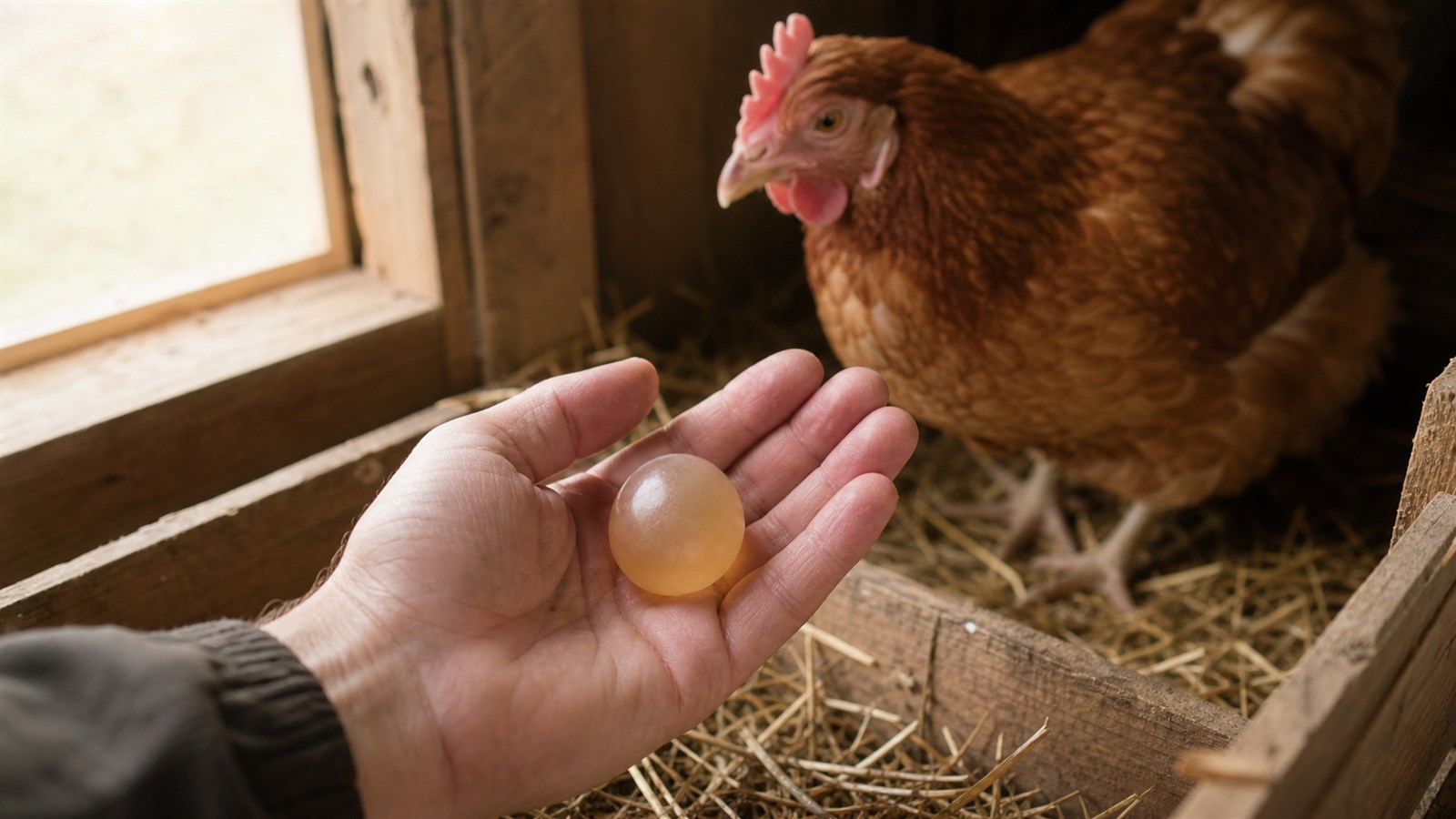

FAQ
How can I tell which hen is eating eggs?
Watch for nest visits after laying, dried yolk and pecked eggs, but use a small camera if possible. It is much more reliable than guessing from flock rank.
Do fake eggs stop egg eating?
They can make pecking unrewarding, but they work best alongside better nest boxes, frequent collection, sound shells and balanced feed.
Does egg eating mean the hens need protein?
An unbalanced diet can contribute, but egg eating also starts through breakage, bright nests, crowding, boredom and learned behaviour. Check the whole setup.
Should I remove an egg-eating hen?
Temporarily separating a confirmed bird can interrupt the habit while you fix the flock setup. Do not permanently remove a hen based on suspicion alone.
Sources behind this guide
The practical advice is checked against poultry extension and veterinary material, not just repeated from forum folklore.
Want to describe what is happening in your flock?
Tell me the birds' age, feed, housing and whether the problem affects one hen or the whole flock. The email address appears only after a click so it is not left open for simple scraping bots.
Keep the details before they disappear from memory
Twoja Farma helps you record eggs, feed changes, flock observations and costs. A short note made today is often more useful than a confident guess next week.