What should chickens not eat? Unsafe foods and what to do after a mistake
 Piotr Markotpoultry keeperFor backyard keepers and small flocksUpdated 23 July 2026
A hen can snatch a mouthful before you have finished reading the packet. That enthusiasm is not proof that the food is safe. The useful skill is knowing which items belong outside the run, then acting calmly and accurately if a bird gets to one.
Unsafe does not always mean the same thing
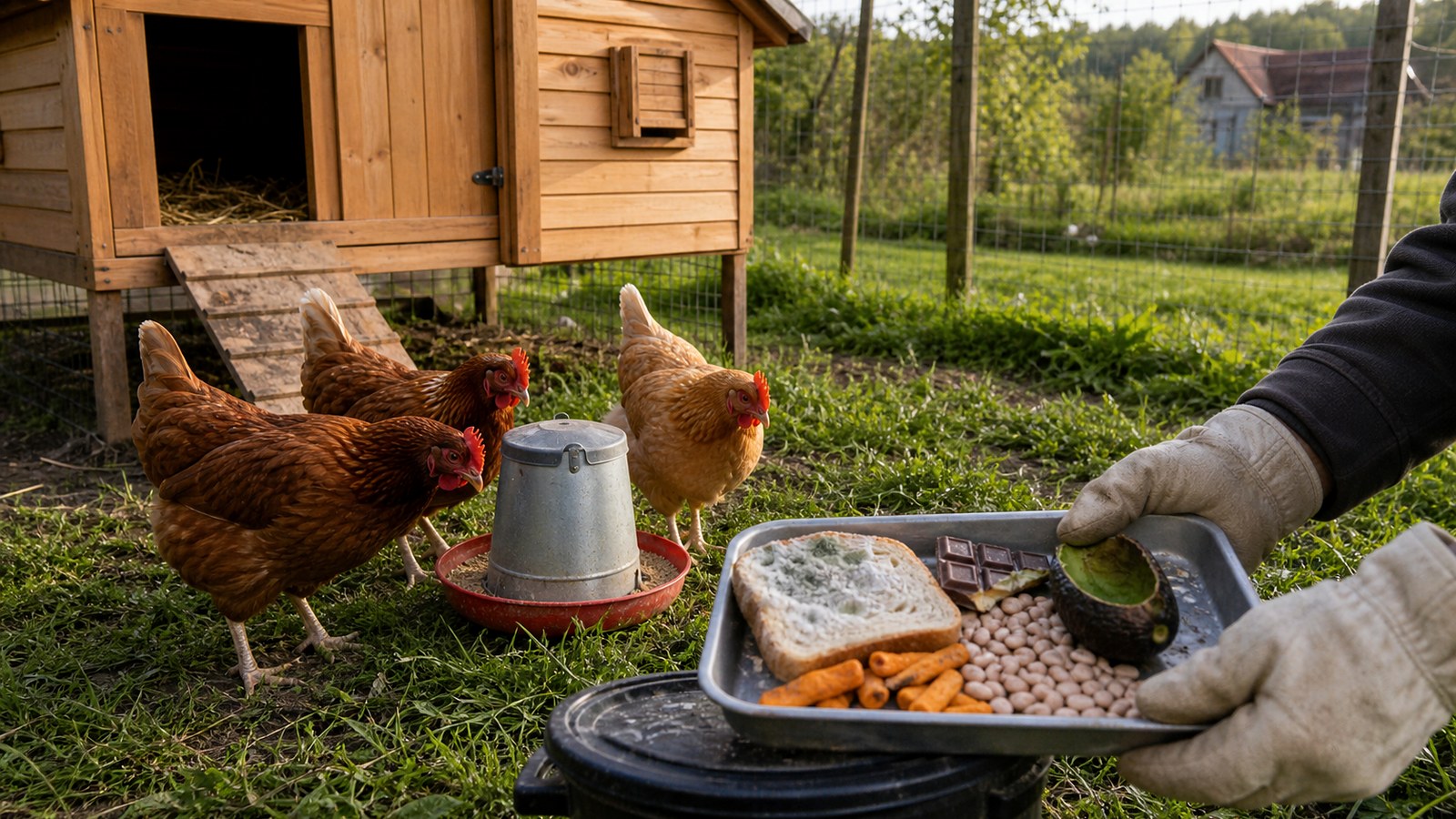
A list of forbidden foods often mixes genuine poisoning hazards with treats that mainly unbalance the ration. Mouldy feed, chocolate and raw dried beans are not the same problem as too much bread, but none deserves a place in the feeder. A hen's willingness to eat something tells us very little about dose or safety.
A complete ration appropriate for the birds' age remains the foundation, with clean water available at all times. For ordinary fruit and vegetables, use the separate guide to what chickens can eat. This page is the keep-it-out list.
Foods and materials I keep out of the run
- Mouldy, rotten or fermenting food and feed. I discard the whole affected portion rather than trimming the visible patch.
- Chocolate, cocoa, coffee, tea, energy drinks and alcohol. These are not poultry treats.
- Raw or undercooked dried beans. They are an unnecessary risk, not a protein shortcut.
- Green potatoes, potato sprouts and green tomato foliage. A ripe tomato fruit is a different matter from stems and leaves.
- Avocado, especially skin and stone. There is no nutritional reason to experiment with it.
- Very salty, fatty or seasoned food. Crisps, cured meat, instant meals, sauces and pickles are not chicken feed.
- Meat, dairy and plate scrapings. They spoil, attract pests and do not repair a poorly balanced ration.
- Unknown or sprayed plants and anything contaminated by chemicals. Rodent bait, slug pellets, paint flakes, fuel and cleaners must be locked away.
Mould means the whole portion is suspect
Damp grain and wet mash can deteriorate before a dramatic green patch appears. A musty smell, heating, clumping or discolouration is enough reason to stop using the batch. Mixing suspicious feed into good feed does not make the risk disappear.
In a backyard setup, storage is often the weak point. I keep feed raised off a damp floor, protected from rain and rodents, and I let washed feeders dry fully before refilling them. In wet British or northern European weather, that routine matters more than buying another supplement.
Salt and processed leftovers cause avoidable trouble
A hen is small, so a portion that looks trivial on a human plate may be meaningful to her. Too much sodium drives thirst and disturbs fluid balance, especially if a drinker is empty, frozen or fouled. Watery droppings and wet litter can be early clues, but severe signs need veterinary help.
That is why I leave out cured meats, crisps, salty rice, takeaway food, gravy and pickled vegetables. The sensible question is not whether a healthy hen might survive one bite. It is why we would choose an unpredictable leftover over a properly formulated feed.
Kitchen waste rules depend on where the flock lives
Across the EU, farmed animals must not be fed catering waste, and the legal definition includes food waste from household kitchens. The UK also has strict rules on feeding kitchen scraps to livestock. A clean vegetable deliberately set aside as feed is not the same as clearing plates into the run.
Rules outside Europe vary, so commercial and registered keepers should check the local veterinary authority rather than rely on a social-media summary. Biosecurity is the reason behind many of these rules: cooked leftovers can still carry material that should not move into the feed chain.
A hen ate something suspicious: the calm first steps
Activated charcoal, oil, milk, salt or electrolytes are not universal antidotes. The correct response depends on the substance, dose, time and condition of the bird. Advice given for a dog or person should not be improvised for a hen.
- Remove the item and secure the area. Check litter, the feeder and the rest of the run for more pieces.
- Identify the product, amount and time. Keep the packet, label or a sample and photograph the ingredient list.
- Provide quiet and clean water. Do not pour liquids into the beak or attempt a home remedy.
- Watch the whole flock. Record which birds may have eaten it, the first signs and changes in droppings.
- Call a poultry-aware vet. Do not wait until tomorrow after chocolate, chemicals, rodent bait, a large salty exposure or obvious neurological signs.
Warning signs that justify urgent help
These signs do not identify one poison by themselves. They tell you that a confident diagnosis from an online list is not enough. A timeline, packaging and a retained sample can make the veterinary investigation much faster.
- sudden weakness, marked lethargy or a bird separating from the flock,
- stumbling, tremors, twisted neck, seizures or leg paralysis,
- laboured breathing, a blue comb or fluid from the beak,
- extreme thirst, repeated watery droppings or rapidly soaking litter,
- several birds becoming ill together or unexpected deaths.
Prevention is a five-minute weekly job
I lock away feed additives, medicines, household chemicals, rodent bait and garden products. Compost stays outside the run. After building work I pick up paint chips, insulation, screws and sealant because a curious hen does not recognise a hazard.
Once a week I smell the feed bin, inspect the drinkers and look for leaks or rodent access. It is an unglamorous routine, which is exactly why it prevents more trouble than a cupboard full of emergency products.
Piotr Markot
poultry keeper. I keep poultry myself and would rather remove a doubtful item than test an internet claim on the flock. When poisoning is possible, the exact product, amount, time and packaging are far more useful than a guess.
Build a safer everyday feeding routine
See all guides →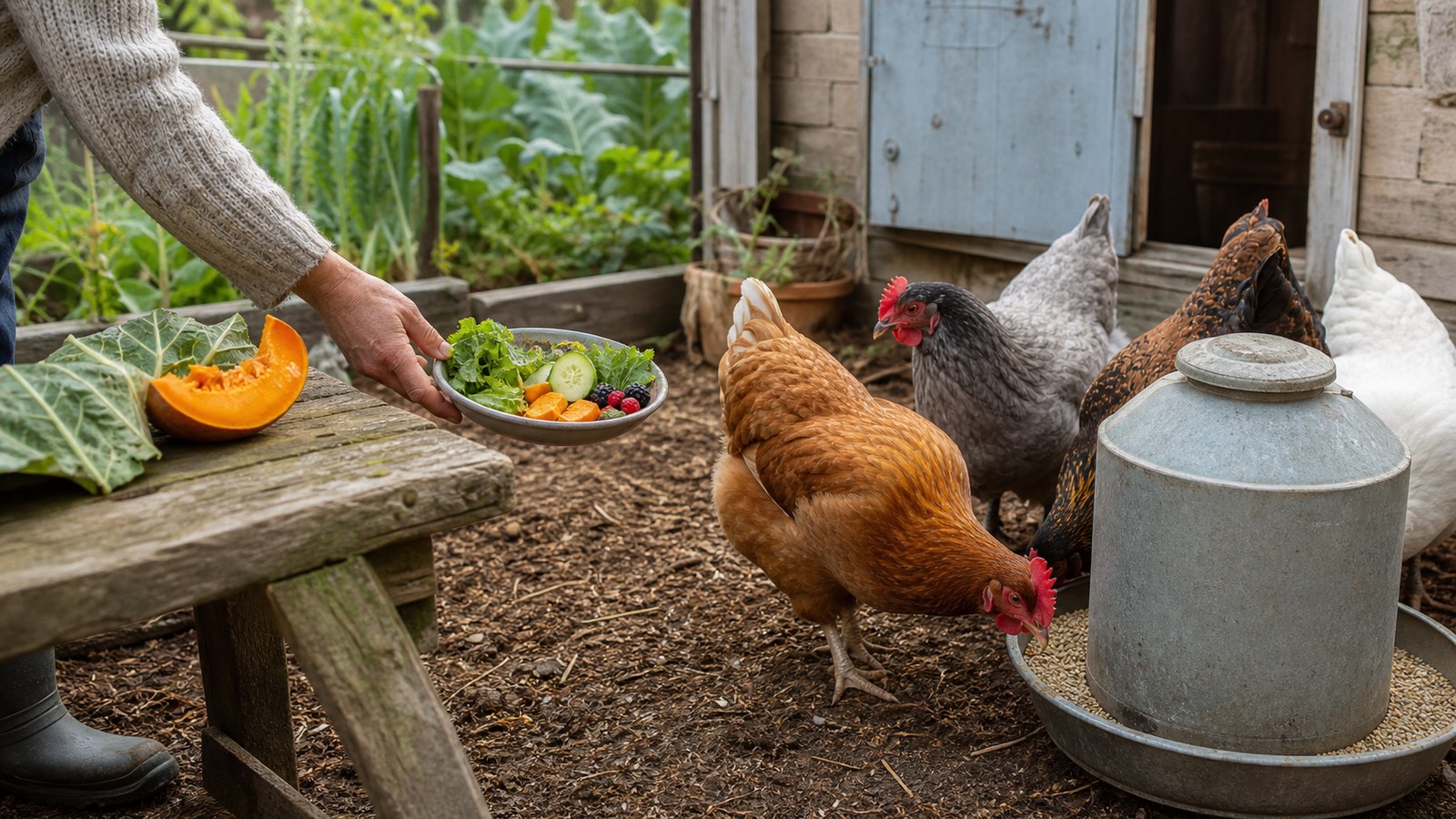
Frequently asked questions
Can chickens eat chocolate?
No. Chocolate and cocoa should stay out of the run. If a hen eats a meaningful amount, identify the product and contact a poultry-aware vet.
Can I cut mould off bread and feed the rest?
No. The visible patch does not show the full extent of spoilage. Discard the whole item and check that stored feed is dry.
Can chickens eat green potatoes?
No. Keep green tubers, sprouts and the green parts of the potato plant away from the flock.
Can chickens eat avocado?
The safest choice is not to feed avocado, particularly the skin and stone. It offers nothing a complete ration needs.
What should I do if a hen eats something toxic?
Remove access, identify the product, amount and time, keep the packaging, provide clean water and call a vet. Do not improvise a home antidote.
Sources used for this guide
The safety advice is checked against veterinary toxicology, poultry extension material and, where relevant, rules on catering waste.
Want to describe what your hen ate?
Include the exact product, approximate amount, time, number of birds and every sign you have seen. In an urgent case, do not wait for an email reply—contact a veterinarian directly.
Record the incident while the details are clear
Twoja Farma lets you note feed changes, unusual exposures, symptoms and later flock observations. A reliable timeline is useful when speaking to a vet.