Which chickens lay blue eggs? Breeds, hybrids and buying traps
 Piotr Markotpoultry keeperFor backyard keepers and small flocks
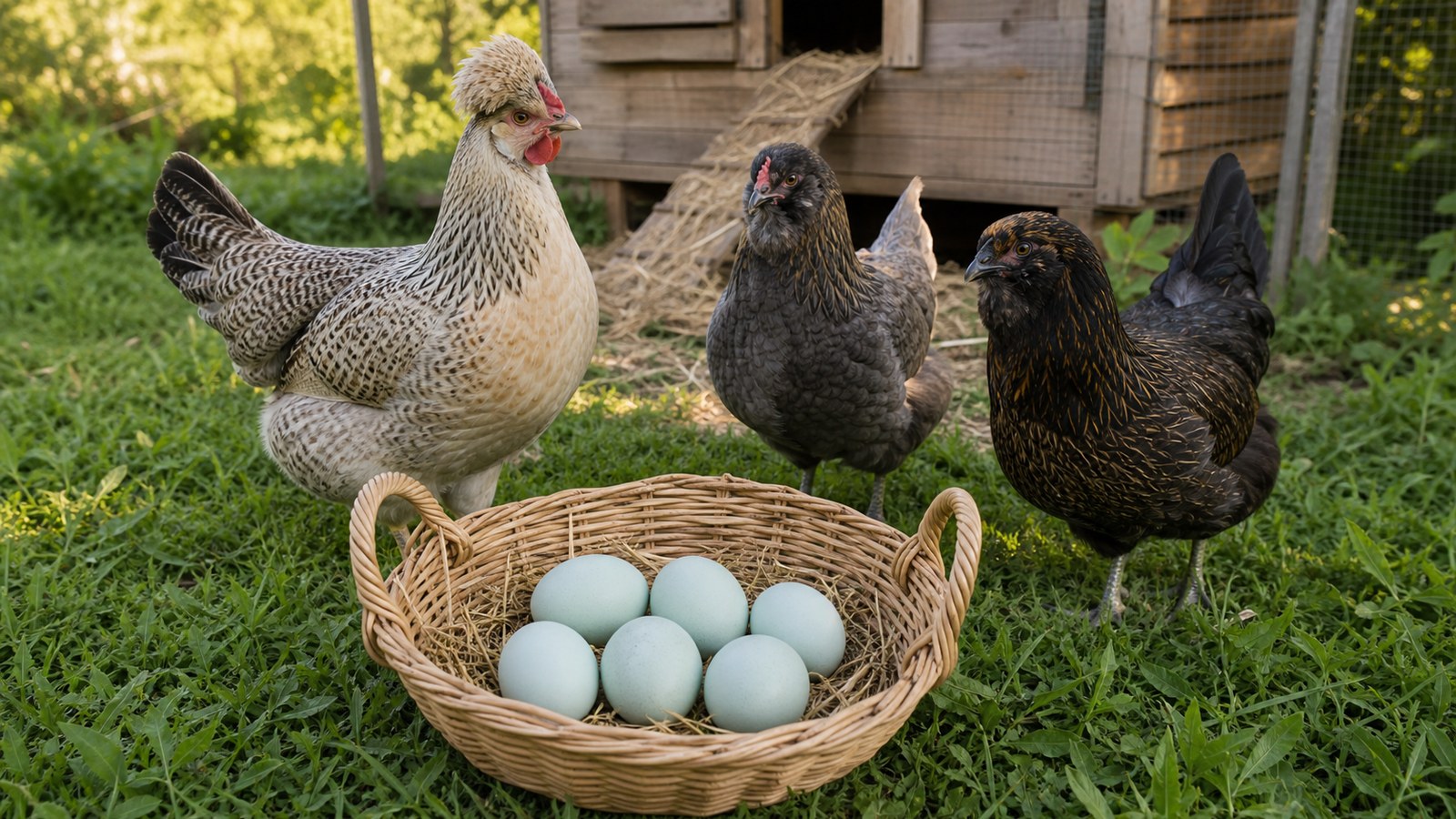
If you want a genuinely blue egg in the nest, the short list starts with Araucana, Ameraucana and Cream Legbar. The awkward part is buying the right bird: hatchery labels, national breed standards and the word ‘Americana’ can turn a simple search into a small detective job.
The quick answer before we get tangled in breed names
The three established names most closely associated with blue shells are Araucana, Ameraucana and Cream Legbar. They do not look the same, they are not equally easy to find in every country, and they do not all lay the exact same shade. What they share is the genetics that allow blue pigment to be built into the shell rather than painted only onto its surface.
Easter Eggers and commercial blue-egg hybrids can also lay lovely blue eggs. They may be excellent backyard hens, but they are not automatically standardised breeds and their offspring are less predictable. That distinction matters if you simply want a colourful egg basket, and it matters even more if you plan to sell hatching eggs or breed a consistent line.
Blue egg layers compared without the hatchery gloss
| Chicken | Likely shell colour | What to know before buying |
|---|---|---|
| Araucana | Blue to blue-green | The breed standard differs sharply between countries, so ask which standard and line the breeder follows. |
| Ameraucana | Blue | A recognised American breed; a true Ameraucana is not the same thing as an Americana or Easter Egger. |
| Cream Legbar | Pastel blue to blue-green | An autosexing British breed that is often easier to manage when hatching your own chicks. |
| Easter Egger | Blue, green, aqua or sometimes another shade | A useful mixed type carrying blue-shell ancestry, not one uniform breed with guaranteed results. |
| Commercial blue-egg hybrid | Usually blue or blue-green | Often productive, but the trade name does not mean the trait will breed true in the next generation. |
| Olive Egger | Olive green | It has a blue base under a brown overlay, so it belongs in the green rather than truly blue part of the basket. |
Why a blue shell is blue all the way through
The blue-shell trait is associated with increased activity around the SLCO1B3 gene in the shell gland. Biliverdin is deposited while the shell is being made, so the colour is visible through the shell instead of sitting only on the outside. Crack a clean blue egg and compare the inner shell with a brown egg: the difference is usually obvious once the membrane is out of the way.
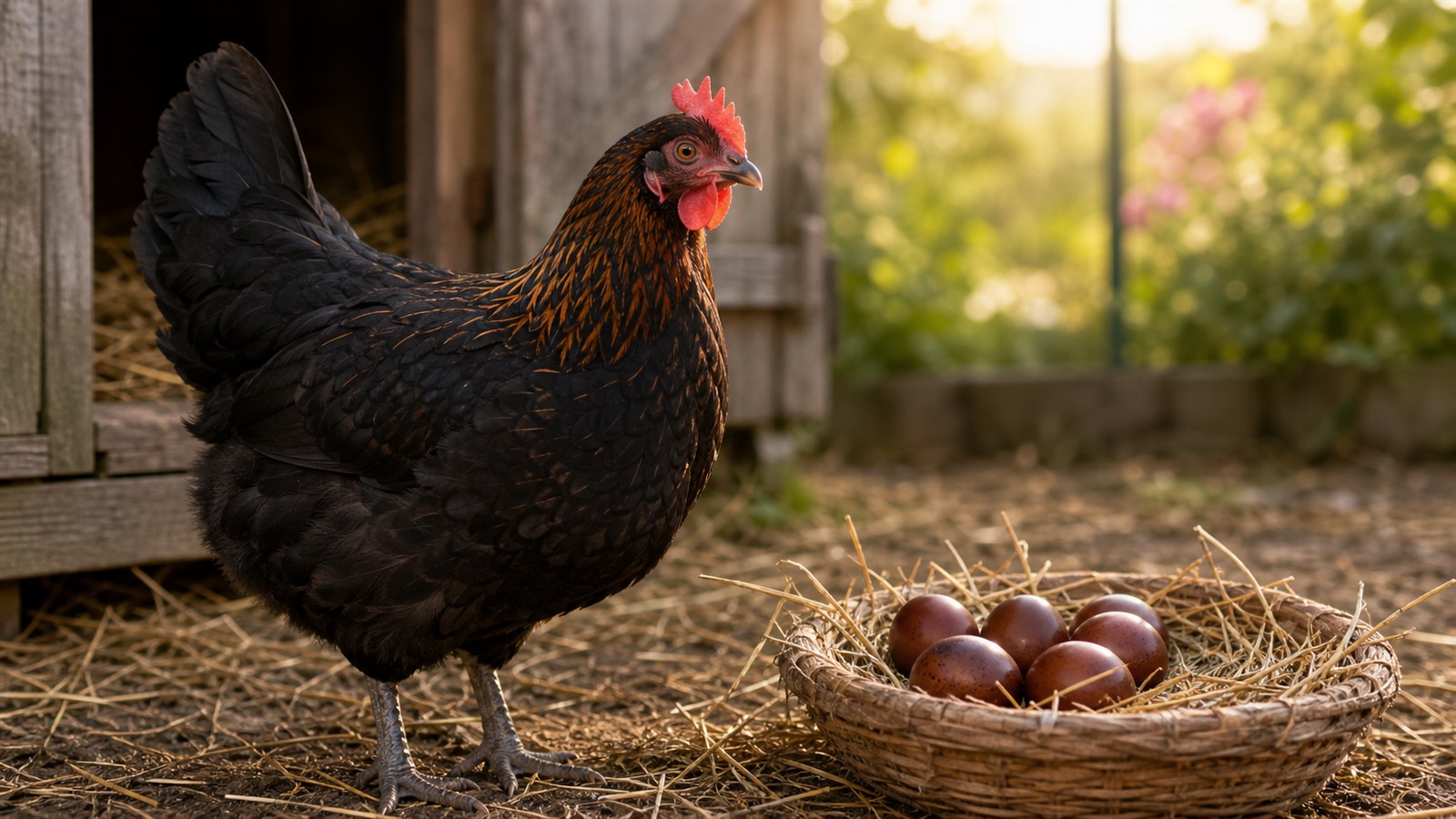
Brown colour works more like a surface coat added late in shell formation. Put brown pigment over a blue base and the result moves through green, khaki and olive. That simple picture explains why feeding spinach cannot turn a white-egg hen into a blue-egg layer. Diet can affect health, laying consistency and sometimes pigment intensity, but the basic shell colour is genetic.
Araucana means different things on opposite sides of the Atlantic
This is where many otherwise sensible articles become misleading. In the United States, the recognised Araucana is rumpless and has ear tufts. In Britain and parts of Europe, tailed and crested birds are part of a different established standard. A picture that proves a bird is wrong for one show standard may be completely normal under another.
For a backyard keeper, the practical questions are simpler: does the breeder maintain separate breeding pens, can they show eggs from several individual hens, and do the birds match the standard they claim to follow? If you want the full breed story rather than just the egg colour, the Araucana breed guide goes into temperament, body type and buying stock in more detail.
Ameraucana, Americana and Easter Egger are not three spellings of one bird
A true Ameraucana is a recognised American breed with a defined body type, pea comb, beard and muffs, slate legs and accepted colour varieties. It should lay blue eggs. An Americana is commonly a hatchery sales label, and an Easter Egger is a mixed blue-gene bird that does not meet a standardised breed description. The mixed bird may still be healthy, friendly and a very good layer; it is simply not the same product.
This distinction is one of the biggest buying traps in North America. If a seller offers ‘rare Ameraucanas’ in colours that do not exist in the claimed standard, cannot name the variety, and guarantees a whole rainbow from identical chicks, slow down. You may be looking at enjoyable Easter Eggers sold at purebred prices.
Cream Legbar: blue eggs with one very practical advantage
Cream Legbars were developed in Britain and are autosexing. In a correctly bred line, male and female chicks show different down patterns at hatch. That does not make every hatch effortless, but it is a real advantage when you want to know early how many future hens and cockerels you have.
They are generally active, curious birds and often stronger layers than exhibition-focused blue-egg breeds. They appreciate room to forage and can be more willing to explore or clear a low fence than a heavy dual-purpose hen. Buy them for the combination of usefulness and colour, not because a catalogue promises every egg will match the same sky-blue paint chip.
How many blue eggs can you reasonably expect?
Numbers below are working ranges for healthy hens in their better laying years, not a guarantee. Line, age, daylight, moulting, broodiness and management can move the result far more than a glossy breed card suggests.
| Chicken | Useful annual range | My practical reading |
|---|---|---|
| Araucana | about 150-200 eggs | A breed-and-colour choice rather than a production record attempt. |
| Ameraucana | about 150-200 eggs | Steady enough for a family flock when sourced from a sound laying line. |
| Cream Legbar | about 180-230 eggs | Often the most production-minded established breed on this list. |
| Easter Egger | roughly 160-230 eggs | A wide range because the name covers many different crosses. |
| Commercial blue hybrid | often 220-280 in the best season | High first-season output does not make it a true-breeding breed. |
Blue, green and olive: the distinction sellers often blur
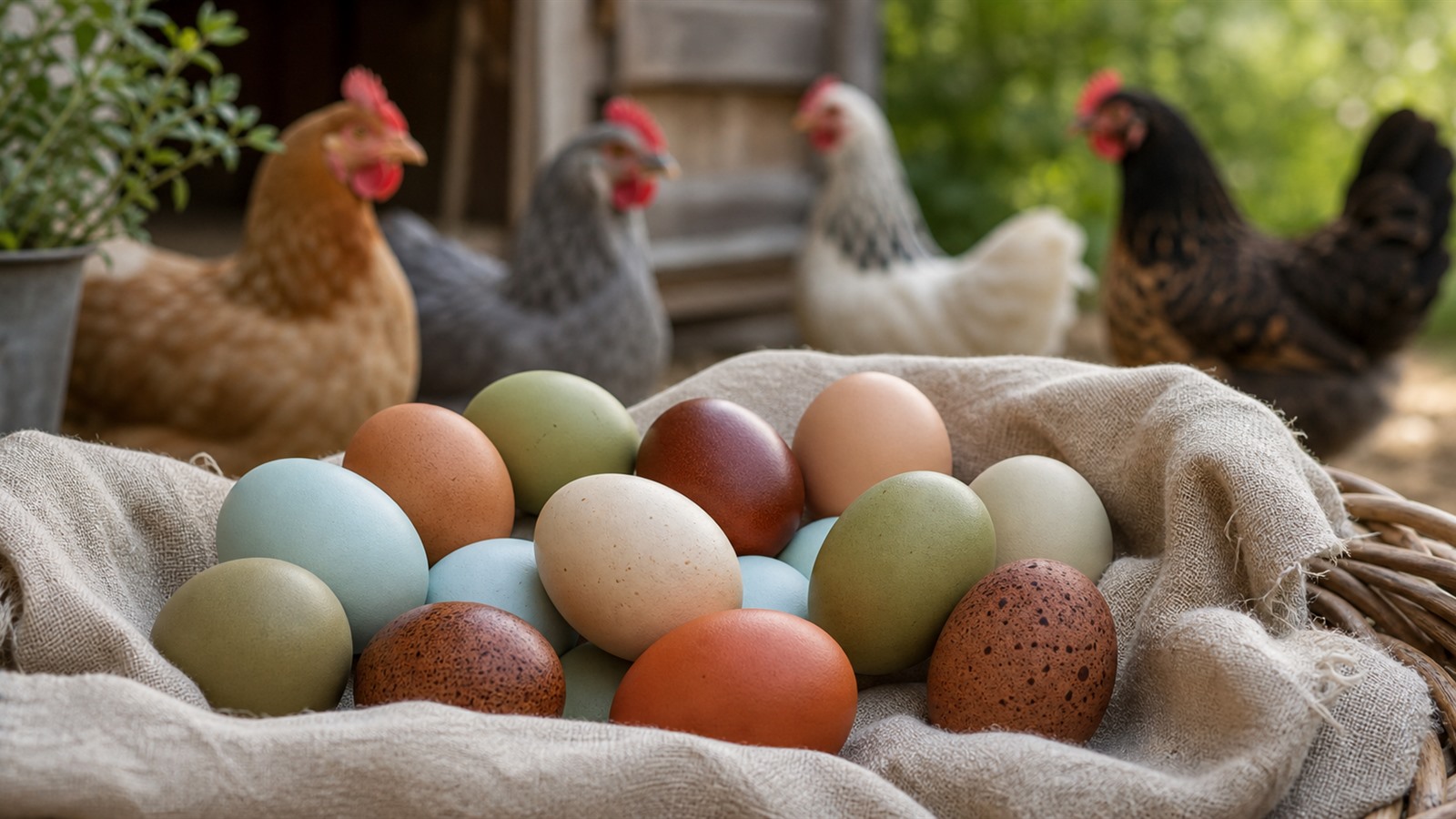
Blue is the base shell colour. Green is usually a blue shell with a lighter brown coating, while olive is the same idea with a stronger brown layer. An Olive Egger can be a brilliant addition to a mixed flock, but calling its egg blue does not make the description more accurate. The colour can also fade during a long laying cycle and look stronger again after a break.
Phone cameras complicate the issue. Automatic white balance can turn pale green into turquoise and shade can make a modest blue look dramatic. Ask for an unedited photograph in daylight beside a white egg and a brown egg. Better still, ask to see several eggs from the specific breeding pen rather than the single best shell laid all year.
What the blue-egg gene does when you start crossing birds
The blue-shell trait is dominant, but that does not mean every chick from one blue egg will become a blue-laying hen. Roughly half the chicks will be male, and the chance of female offspring inheriting the trait depends on whether a parent carries one or two copies of the relevant variant. Brown-shell genetics from the other side can also change the visible result to green or olive.
If you want predictable offspring, keep breeding groups separate, identify which hen laid each hatching egg and record the first eggs from the daughters. A blue egg tells you something about its mother, not everything about the chick inside it. The practical preparation is covered in the guide to choosing eggs for incubation.
My buying checklist before money changes hands
- Ask whether you are buying a recognised breed, a mixed Easter Egger type or a commercial hybrid.
- Request daylight photos of several eggs beside a plain white reference egg.
- See both parent groups and confirm that breeding pens are kept separate.
- For Ameraucanas, ask for the recognised variety rather than accepting a vague colour name.
- For Cream Legbars, ask whether the line is reliably autosexing and how the breeder marks doubtful chicks.
- Do not infer egg colour from feather colour; a blue-feathered hen can lay brown eggs.
- Start with a small batch of hatching eggs before buying an incubator full from an unknown line.
- Treat an absolute shade guarantee on an unlaid pullet as marketing, not evidence.
When pullets start laying and why the first egg may surprise you
Most pullets in these groups begin somewhere around five to seven months, but season and rearing conditions matter. A late-summer chick may mature physically as the days shorten and then keep you waiting. The first eggs are often small, and colour can settle over the next few lays. One odd shell is not enough to judge an entire line.
I would photograph the first five eggs in the same daylight and label them by hen if possible. That gives a much fairer picture than comparing one wet egg in a dark nest with a heavily edited breeder photograph. Over time the same hen’s shells can become paler during a long run of laying; the underlying genetic colour has not suddenly changed.
Are blue eggs healthier or lower in cholesterol?
No useful health claim follows from shell colour alone. Blue eggs are not automatically lower in cholesterol, richer in nutrients or better tasting. The hen’s diet, health, access to forage, freshness of the egg and storage matter much more than the pigment in the shell.
There is no need to invent a nutritional miracle to enjoy them. Blue eggs make a mixed basket beautiful, help identify which breeding group is laying and are a good reason to learn more about genetics. Those are honest advantages, and they are more than enough.
What I would choose for three different backyard plans
For a small family flock where eggs matter more than showing birds, I would choose well-described Cream Legbars or honest Easter Eggers from parents whose eggs I had seen. For a breeding project, I would buy a properly documented Araucana or Ameraucana line and keep it separate. For the most colourful basket, I would combine two blue layers with white, brown and dark-brown layers rather than fill the entire coop with one breed.
The broader guide to chicken breeds for colourful eggs helps build that mixed basket. Whatever the plan, choose birds that suit your climate, space and flock temperament first. A beautiful egg loses its charm quickly if the hen is constantly bullied, escapes every afternoon or comes from a weak line.
The simplest conclusion
If you want the safest three-name answer, look for Araucana, Ameraucana or Cream Legbar. If you only want attractive eggs and do not plan to breed to a standard, a clearly described Easter Egger or blue-egg hybrid can be just as satisfying. The key is paying for what the bird really is, not for a clever label.
I trust repeated evidence: several eggs, known parents, separate pens and a breeder willing to explain what does not always go perfectly. That approach is less exciting than a guaranteed ‘rare rainbow chicken’, but it is far more likely to put genuinely blue eggs in your own nest box.
Piotr Markot
poultry keeper. I keep poultry myself and write about the checks that actually help around a small coop, without pretending that every odd egg or missing feather has one magic answer.
Read next on the blog
See all guides →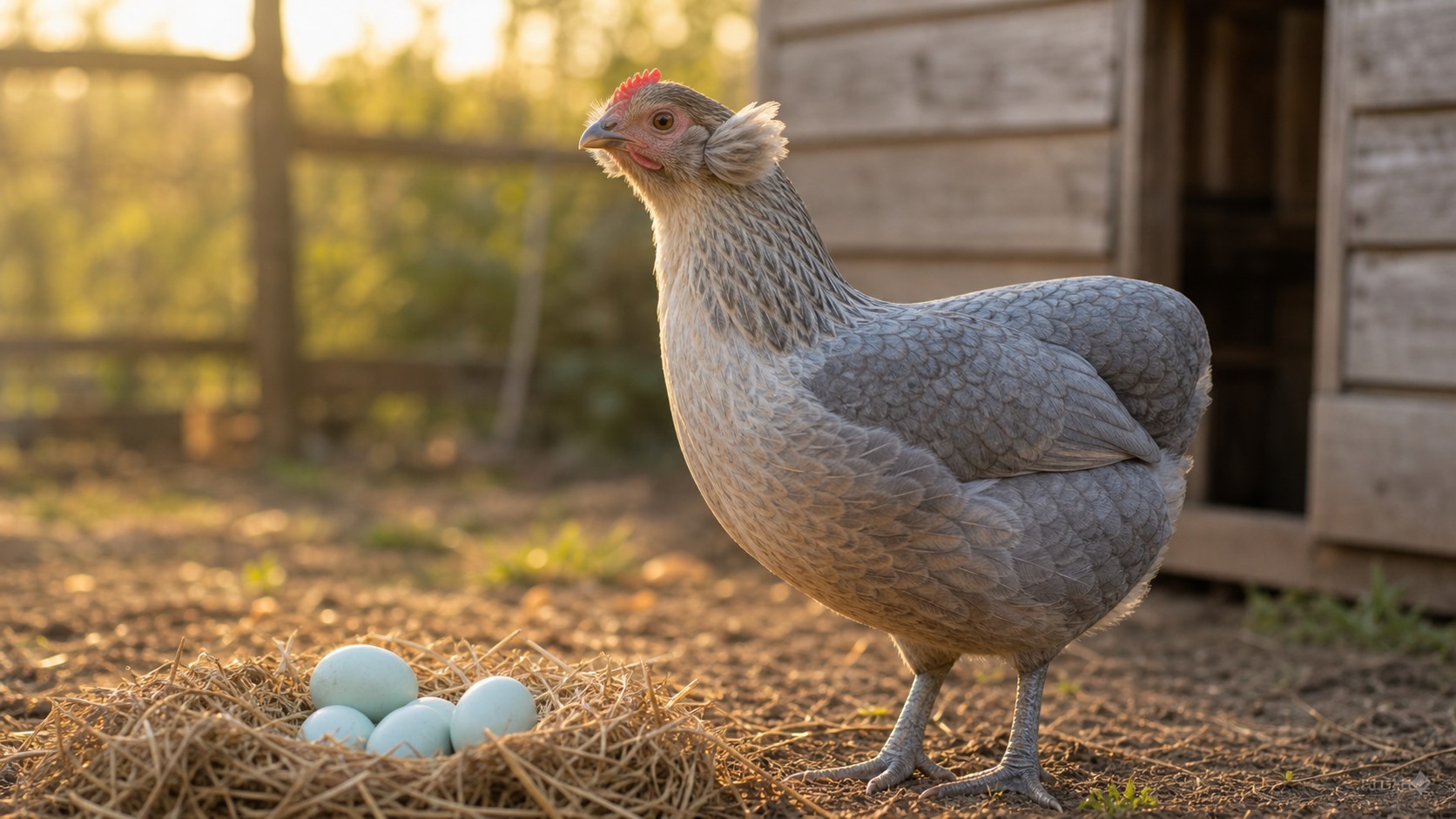
FAQ
What breed of chicken lays a truly blue egg?
Araucana, Ameraucana and Cream Legbar are the best-known established breeds. Shade varies by line and can range from pale blue to blue-green.
Is an Easter Egger the same as an Ameraucana?
No. Ameraucana is a recognised breed. Easter Egger is a mixed type carrying blue-shell ancestry and may lay blue, green or aqua eggs.
Will a chick hatched from a blue egg lay blue eggs?
Not necessarily. It may be male, and a female chick must inherit the blue-shell variant. The result depends on both parents.
Can feed make a hen lay blue eggs?
No. Feed supports health and shell quality, but it cannot replace the genetics that determine the basic shell colour.
Are blue chicken eggs healthier?
Shell colour alone does not make an egg healthier or lower in cholesterol. Diet, hen health, freshness and storage matter more.
Why are my hen's blue eggs getting paler?
Colour often becomes less intense during a long laying sequence and can strengthen after a break or moult. Compare several clean, dry eggs in the same light.
Sources behind this guide
The practical advice is checked against poultry extension and veterinary material, not just repeated from forum folklore.
Want to describe what is happening in your flock?
Tell me the birds' age, feed, housing and whether the problem affects one hen or the whole flock. The email address appears only after a click so it is not left open for simple scraping bots.
Keep the details before they disappear from memory
Twoja Farma helps you record eggs, feed changes, flock observations and costs. A short note made today is often more useful than a confident guess next week.